Showing posts with label RFID/GPS/Electronic Surveillance. Show all posts

February 7, 2018

Police in China are Scanning Travelers with Facial Recognition Glasses

February 7, 2018

(Engadget) - Police in China are now sporting glasses equipped with facial recognition devices and they're using them to scan train riders and plane passengers for individuals who may be trying to avoid law enforcement or are using fake IDs. So far, police have caught seven people connected to major criminal cases and 26 who were using false IDs while traveling, according to People's Daily.

The Wall Street Journal reports that Beijing-based LLVision Technology Co. developed the devices. The company produces wearable video cameras as well and while it sells those to anyone, it's vetting buyers for its facial recognition devices. And, for now, it isn't selling them to consumers. LLVision says that in tests, the system was able to pick out individuals from a database of 10,000 people and it could do so in 100 milliseconds. However, CEO Wu Fei told the Wall Street Journal that in the real world, accuracy would probably drop due to "environmental noise." Additionally, aside from being portable, another difference between these devices and typical facial recognition systems is that the database used for comparing images is contained in a hand-held device rather than the cloud.

Obviously, there are privacy concerns regarding this technology and not everyone believes police should be using it. Amnesty International's William Nee told the Wall Street Journal, "The potential to give individual police officers facial recognition technology in sunglasses could eventually make China's surveillance state all the more ubiquitous." Last month, reports surfaced that China was using facial recognition to geo-fence residents of the Muslim-dominated Xinjiang region of the country, a move that has attracted criticism from a number of human rights groups. China is also working on building a facial recognition database that will contain info on all of its 1.3 billion citizens.

This time of year is one of the busiest travel periods in China as this month hosts the lunar new year. Around 389 million train trips are expected to take place during this year's Spring Festival as well as 65 million trips by air.

December 14, 2016

House Passed Bill Allowing Government to Microchip Citizens with ‘Mental Disabilities’


December 13, 2016

TRUE ACTIVIST - Though the bill only targets those with conditions such as Alzheimers and autism, critics say the bill’s passage will open a “pandora’s box” of invasive government surveillance.

Six years ago, NBC Nightly News boldly predicted that all Americans would be fitted with RFID microchips by the year 2017. Though at the time, NBC’s prediction seemed far-fetched, the House recently passed a bill that would bring a micro-chipped populace closer to reality before year’s end. Last Thursday, the House passed HR 4919, also known as Kevin and Avonte’s Law, which would allow the US attorney general to award grants to law enforcement for the creation and operation of “locative tracking technology programs.”

Though the program’s mission is to find “individuals with forms of dementia or children with developmental disabilities who have wandered from safe environments,” it provides no restriction on the tracking programs inclusion of other individuals. The bill would also require the attorney general to work with the secretary of health and human services and unnamed health organizations to establish the “best practices” for the use of tracking devices.

Congress Hands Government Authority to Microchip People with 'Mental Disabilities' (HR 4919)

via Truthstream Media

Those in support of the legislation maintain that such programs could prevent tragedies where those with mental or cognitive disabilities wandered into dangerous circumstances. Yet, others have called these good intentions a “Trojan horse” for the expansion of a North American police state as the bill’s language could be very broadly interpreted.
“While this initiative may have noble intentions, ‘small and temporary’ programs in the name of safety and security often evolve into permanent and enlarged bureaucracies that infringe on the American people’s freedoms. That is exactly what we have here. A safety problem exists for people with Alzheimer’s, autism and other mental health issues, so the fix, we are told, is to have the Department of Justice, start a tracking program so we can use some device or method to track these individuals 24/7,” Representative Louie Gohmert (R-TX) said in a floor speech opposing the bill.
Gohmert’s assessment is spot-on. Giving local police the authority to decide who is micro-chipped and who is not based on their mental soundness is a recipe for disaster. Though the bill specifically mentions those with Alzheimer and autism, how long before these tracking programs are extended to those with ADHD and Bipolar disorder among other officially recognized disorders. Even the dislike of authority is considered a mental disorder known as “Oppositional Defiant Disorder,” which could also warrant micro-chipping in the future.

If these programs expand unchecked, how long will it be before all Americans are told that mass microchipping is necessary so that law enforcement and the government can better “protect” them?

Many Americans have been content to trade their liberties for increased “security” in the post-9/11 world, particularly when the state uses these talking points. Yet, as Benjamin Franklin once said, “those who surrender freedom for security will not have, nor do they deserve, either one.”

December 7, 2016

Amazon Go Stores Could Watch, Listen, and Remember Your Every Move

December 6, 2016

THE VERGE - There’s a lot of excitement about Amazon Go, the company’s new kind of grocery store that lets customers take what they need and leave without ever waiting in line, but there weren’t a whole lot of specifics on how this system works. An Amazon patent filed in 2014 gives us a glimpse of how this could all operate, and it involves — you betcha — hella cameras.

The patent describes a system where cameras could capture you as you walk into the store, then identify who you are based on an ID card that’s associated with your Amazon account (in Amazon Go’s case, an app that you scan when you enter). Facial recognition may also be used.

Once you’re in the store, cameras could follow you around as you navigate the aisles to see where you’re browsing and what items you pick up. “The user's location within the materials handling facility and identification of the inventory location within the user's location may also be determined,” the patent details. “Microphones may record sounds made by the user and the computing resource(s) may process those sounds to determine a location of the user.” In addition to microphones, Amazon also listed cellular triangulation as a potential method for locating a customer’s location.

Freshpatents.com

As you’re shopping, sensors in the inventory shelves monitor when which items are being picked up. The sensors watch for whether the item gets put back down on the shelf or not, and may even check if the weight of the item changes from its original state. This is likely designed so people are correctly charged if they pick up a food or drink and begin consuming them while they’re still in the store.

Static cameras watching the shelf also determine whether multiples of the same item are taken, such as several sticks of gum or a few bags of chips. If you pick up several bags of chips just to get the one on the inside, the camera is supposed to know that you ended up putting the other bags of chips back as well. If Amazon is not confident about how many items you took or what exactly you took (i.e., a Colgate versus Crest toothbrush) it may end up confirming with you to charge the right amount.

The cameras can even go so far as to determine your skin tone color. The patent says this is used to identify the shopper’s hand to see whether they actually pick up anything off a shelf, but combine that with the fact that Amazon knows what you’re buying and who you are down to your skin color and this is pretty next-level market research data. (Not to mention... kind of creepy?)

October 4, 2016

Yahoo Secretly Scanned Customer Emails for U.S. Intelligence - Sources

October 4, 2016

Reuters -Yahoo Inc last year secretly built a custom software program to search all of its customers' incoming emails for specific information provided by U.S. intelligence officials, according to people familiar with the matter.

The company complied with a classified U.S. government demand, scanning hundreds of millions of Yahoo Mail accounts at the behest of the National Security Agency or FBI, said three former employees and a fourth person apprised of the events.
 

Some surveillance experts said this represents the first case to surface of a U.S. Internet company agreeing to an intelligence agency's request by searching all arriving messages, as opposed to examining stored messages or scanning a small number of accounts in real time.
 

It is not known what information intelligence officials were looking for, only that they wanted Yahoo to search for a set of characters. That could mean a phrase in an email or an attachment, said the sources, who did not want to be identified.
 

Reuters was unable to determine what data Yahoo may have handed over, if any, and if intelligence officials had approached other email providers besides Yahoo with this kind of request.
 

According to two of the former employees, Yahoo Chief Executive Marissa Mayer's decision to obey the directive roiled some senior executives and led to the June 2015 departure of Chief Information Security Officer Alex Stamos, who now holds the top security job at Facebook Inc.
"Yahoo is a law abiding company, and complies with the laws of the United States," the company said in a brief statement in response to Reuters questions about the demand. Yahoo declined any further comment.
Through a Facebook spokesman, Stamos declined a request for an interview.
 

The NSA referred questions to the Office of the Director of National Intelligence, which declined to comment.
 

The request to search Yahoo Mail accounts came in the form of a classified edict sent to the company's legal team, according to the three people familiar with the matter.
 

U.S. phone and Internet companies are known to have handed over bulk customer data to intelligence agencies. But some former government officials and private surveillance experts said they had not previously seen either such a broad demand for real-time Web collection or one that required the creation of a new computer program.
"I've never seen that, a wiretap in real time on a 'selector,'" said Albert Gidari, a lawyer who represented phone and Internet companies on surveillance issues for 20 years before moving to Stanford University this year. A selector refers to a type of search term used to zero in on specific information.
"It would be really difficult for a provider to do that," he added.

Experts said it was likely that the NSA or FBI had approached other Internet companies with the same demand, since they evidently did not know what email accounts were being used by the target. The NSA usually makes requests for domestic surveillance through the FBI, so it is hard to know which agency is seeking the information.
 

Alphabet Inc's Google and Microsoft Corp, two major U.S. email service providers, separately said on Tuesday that they had not conducted such email searches.
"We've never received such a request, but if we did, our response would be simple: 'No way'," a spokesman for Google said in a statement.
A Microsoft spokesperson said in a statement, "We have never engaged in the secret scanning of email traffic like what has been reported today about Yahoo." The company declined to comment on whether it had received such a request.
 

CHALLENGING THE NSA
 

Under laws including the 2008 amendments to the Foreign Intelligence Surveillance Act, intelligence agencies can ask U.S. phone and Internet companies to provide customer data to aid foreign intelligence-gathering efforts for a variety of reasons, including prevention of terrorist attacks.
 

Disclosures by former NSA contractor Edward Snowden and others have exposed the extent of electronic surveillance and led U.S. authorities to modestly scale back some of the programs, in part to protect privacy rights.


February 17, 2016

Apple CEO Tim Cook's Full Letter Responding to the FBI's Court Order to Create a Backdoor That Would Circumvent iPhone Security

"Those who surrender freedom for security will not have, nor do they deserve, either one." - Benjamin Franklin
Cook says that as good as the FBI’s intentions are, forcing Apple to create a backdoor into its otherwise heavily protected products doesn’t seem right. “And ultimately,” he concludes, “we fear that this demand would undermine the very freedoms and liberty our government is meant to protect.”

The following is a letter from Apple CEO Tim Cook in response to a Judge order for the company to hack the phone of a terrorist who killed 14 in San Bernardino in December.

A Message to Our Customers

The United States government has demanded that Apple take an unprecedented step which threatens the security of our customers. We oppose this order, which has implications far beyond the legal case at hand.

This moment calls for public discussion, and we want our customers and people around the country to understand what is at stake.

The Need for Encryption

Smartphones, led by iPhone, have become an essential part of our lives. People use them to store an incredible amount of personal information, from our private conversations to our photos, our music, our notes, our calendars and contacts, our financial information and health data, even where we have been and where we are going.

All that information needs to be protected from hackers and criminals who want to access it, steal it, and use it without our knowledge or permission. Customers expect Apple and other technology companies to do everything in our power to protect their personal information, and at Apple we are deeply committed to safeguarding their data.

Compromising the security of our personal information can ultimately put our personal safety at risk. That is why encryption has become so important to all of us.

For many years, we have used encryption to protect our customers’ personal data because we believe it’s the only way to keep their information safe. We have even put that data out of our own reach, because we believe the contents of your iPhone are none of our business.

The San Bernardino Case

We were shocked and outraged by the deadly act of terrorism in San Bernardino last December. We mourn the loss of life and want justice for all those whose lives were affected. The FBI asked us for help in the days following the attack, and we have worked hard to support the government’s efforts to solve this horrible crime. We have no sympathy for terrorists.

When the FBI has requested data that’s in our possession, we have provided it. Apple complies with valid subpoenas and search warrants, as we have in the San Bernardino case. We have also made Apple engineers available to advise the FBI, and we’ve offered our best ideas on a number of investigative options at their disposal.

We have great respect for the professionals at the FBI, and we believe their intentions are good. Up to this point, we have done everything that is both within our power and within the law to help them. But now the U.S. government has asked us for something we simply do not have, and something we consider too dangerous to create. They have asked us to build a backdoor to the iPhone.

Specifically, the FBI wants us to make a new version of the iPhone operating system, circumventing several important security features, and install it on an iPhone recovered during the investigation. In the wrong hands, this software — which does not exist today — would have the potential to unlock any iPhone in someone’s physical possession.

The FBI may use different words to describe this tool, but make no mistake: Building a version of iOS that bypasses security in this way would undeniably create a backdoor. And while the government may argue that its use would be limited to this case, there is no way to guarantee such control.

The Threat to Data Security

Some would argue that building a backdoor for just one iPhone is a simple, clean-cut solution. But it ignores both the basics of digital security and the significance of what the government is demanding in this case.

February 7, 2016

The Village of Freeport on the South Shore of Long Island Scans Every License Plate That Rolls into Town

A New York village that installed a ring of license plate scanning cameras in hopes of improving policing has found the monitors have become something of a double-edged sword

February 7, 2016

AP - When this Long Island village switched on its "ring of steel" last fall, it knew it was getting a potent policing tool. The system of 27 cameras would scan the license plate of every single vehicle that rolled into town. If a wanted criminal drove through, the system would sound an alert. If someone burglarized a house, the data could be mined to see who was on the road at the time.

Police weren't prepared, though, for the firehose of less-valuable intelligence generated by the $750,000 system.

Since the scanners went live Nov. 2, they have been triggering an average of 700 alarms a day, mainly about cars on the road with expired or suspended registration stickers. Officers have impounded 500 vehicles. They've written more than 2,000 court summonses, mostly for minor violations.
"It is a tremendous amount of workload that has been increased due to this new technology," said Miguel Bermudez, police chief in the town of Freeport.
Mayor Robert Kennedy dismissed any notion that the system may be diverting the department's attention from more serious offenses while Bermudez noted that it quickly became clear his 95 officers would be unable to respond to every ping signaling an infraction. After overtime expenses jumped at least 20 percent, the department has lately adjusted its approach, responding only to higher priority alarms.

But the chief is still talking about hiring another six to eight officers who would be dedicated solely to traffic duties and responding to license plate scanner alerts, in part because there have been some major successes.

In January, an officer responding to an alert about a stolen car discovered that the man behind the wheel, Tremain Williams, was wanted for killing a man in Norfolk, Virginia. Police found an M-4 assault rifle in the trunk. Williams has pleaded not guilty; his attorney declined to comment.

In its first 90 days of operation, 15 stolen cars were spotted and returned to their rightful owners.

About two dozen other crime suspects have been arrested, including two men suspected in a series of armed robberies who were in a stolen car as well as a man wanted for allegedly burglarizing local churches.

Kennedy would not say how much money has been generated through the village system, noting that it has only been up and running for about 90 days and it isn't possible to determine what the cost has been beyond the installation fee.

The use of license plate scanners has been proliferating at law enforcement agencies nationwide.

A 2012 study by the Police Executive Research Forum, a research and policy group, found that about 7 in 10 law enforcement agencies nationwide have at least some access to the technology.

Some departments mount scanners in patrol cars that capture data as officers drive around town. Others buy access to databases maintained by private companies that mount plate scanning cameras on tow trucks.

Civil liberties advocates have raised some privacy concerns. They say the cameras capture the movements of millions of drivers, regardless of whether they are being investigated by law enforcement.

Freeport's cameras have the capability of scanning about 2,000 cars per minute. So far, the village system has scanned plates more than 15 million times.

Different states and jurisdiction have different rules about how long collected plate data can be stored and when it may be accessed.

Jason Starr, the Nassau County chapter director at the New York Civil Liberties Union, said he is concerned that Freeport has yet to provide detailed information about who has access to the information.
"This is data that can be abused," he said. "There needs to be really tight measures on who has access to this information."

December 20, 2015

By Including Them in the Federal Budget Deal, Congress Snuck into Law Deeply Unpopular Things They Could Never Justify Introducing or Voting for on Their Own

5 Horrible Things Congress Just Snuck Into Law

December 19, 2015

Huffington Post - Congress has officially approved the latest omnibus budget deal, which now heads to President Obama's desk. The bill is essentially guaranteed to be signed into law, because anything less means the government would shut down. Again.

In what's become something of a sick annual tradition, members of Congress attached a multitude of riders to this must-pass piece of legislation in an attempt to sneak through deeply unpopular things they could never justify introducing or voting for on their own.

The text of the 2,000 page bill was quietly made available to the public in the middle of the night on Tuesday -- just a few days before it was passed by both houses of Congress. So, what was Congress trying to hide? Here are five of the most egregious things we found.

THE PART COPY-PASTED FROM CISA -- A HIGHLY CONTROVERSIAL GOVERNMENT SURVEILLANCE BILL

Civil libertarians and privacy advocates received a nasty shock when it was discovered that the full text of Cybersecurity Information Sharing Act (CISA) was added 1,729 pages into the budget deal. Pushed as a "cybersecurity" measure, CISA actively encourages companies to quietly share data they've accumulated on consumers with numerous government agencies.

While the bill has been lambasted by privacy advocates and major tech companies like Apple, Google, Twitter, and Wikipedia, it does have the blessing of numerous industries that spend big to buy political influence -- The Telecommunications Industry Association, the Financial Services Roundtable, and Retail Industry Leaders Association have all applauded its passage.

THE PART THAT ALLOWS FOR MORE SECRET (AND POSSIBLY FOREIGN) POLITICAL MONEY

A provision buried on page 472 added the Internal Revenue Service (IRS) from taking any action to reign in the political activity of 501(c)4 organizations. These organizations, which enjoy significant tax exemptions as nonprofits, weren't originally supposed to engage in political activity at all. In recent years, however, they've become a favorite of anyone who wants to buy political influence without attracting attention.

Everyone from Karl Rove's Crossroads GPS to the Harry Reid-aligned Patriot Majority USA has taken advantage of the lax rules governing 501(c)4s. Since there's no legal requirement that 501(c)4 organizations disclose their donors, anyone can use them as a vehicle to pour unlimited money into our political system. And we mean anyone. As former Republican Federal Election Commissioner Trevor Potter has pointed out, even foreign nationals and governments could use 501(c)4s to quietly influence U.S. policy.

Let that sink in folks: Rather than allow the IRS to prevent the abuse of tax-exempt nonprofit status for purely political purposes by both parties, Congress has specifically banned the agency from taking any kind of action -- even at the risk of allowing secret foreign money to poison our elections.

December 17, 2015

Congress Snuck the Controversial Cybersecurity Bill into the Federal Budget Bill at 1:04 AM on December 16, 2015

Under the cybersecurity bill, companies would be encouraged to silently share "security" information with the Department of Homeland Security and, ultimately, other government agencies. The terms of such agreements are vague and give broad leeway for companies to share information with the feds without accountability. The final version of the bill was to be sent to the White House for a signature or veto from the president.

Congress snuck a surveillance bill into the federal budget last night

December 16, 2015

The Verge - After more than a year of stalemate, Congress has used an unconventional procedural measure to bring a controversial cybersurveillance bill to the floor.

Late last night, Speaker of the House Paul Ryan (R-WI) announced a 2,009-page omnibus budget bill, a last-minute compromise necessary to prevent a government shutdown. But while the bulk of the bill concerns taxes and spending, starting on page 1728 it contains the full text of the controversial Cybersecurity Information Sharing Act of 2015, which passed the Senate in October.

CISA has been widely criticized since it was first introduced to congress in 2014, with Sen. Ron Wyden (D-OR) calling it "a surveillance bill by another name." The bill would make it easier for private sector companies to share user information with the government and other companies, removing privacy and liability protections in the name of better cybersecurity. But critics like Wyden say removing those protections would turn internet backbone companies into de facto surveillance organs, with no incentive to protect users' privacy.
"A disingenuous attempt to quietly expand the US government’s surveillance programs."
In many ways, the bill currently facing the House is even more invasive than previous versions, stripping out crucial provisions that prevented direct information-sharing with the NSA and mandated that data be anonymized before being widely distributed.
"It’s clear now that this bill was never intended to prevent cyber attacks," said Evan Greer, campaign director of Fight for the Future, which has campaigned vigorously against the bill. "It’s a disingenuous attempt to quietly expand the US government’s surveillance programs." 
At the same time, a number of industry groups have applauded the bill, including the Financial Services Roundtable and Retail Industry Leaders Association.

Last night's proposal means CISA is more likely than ever to become law.

December 10, 2015

Swedish Workers Volunteer to Get RFID Implants

Office complex implants RFID chips in employees' hands

RFID chip on hand
An RFID chip like this one is being implanted in the hands of Swedish office workers to enable access through security doors and to even pay for lunch in the cafeteria.

February 6, 2015

Computerworld  - The corporate tenants of a Swedish high-tech office complex are having RFID chips implanted in their hands, enabling access through security doors, as well as services such as copy machines, all without PIN codes or swipe cards.

The employees working at Epicenter, a 15,000-square-foot building in Stockholm, can even pay for lunch using their implants -- just as they would with the swipe of a credit card.

The owners of Epicenter say they want the facility to be a "magnet for fast growing digital companies and cutting-edge creative corporate initiatives."
"The fact that some people at the Epicenter office have chosen to replace their key fobs with NFC implants is their own personal choice," said Hannes Sjöblad, founder of Bionyfiken, a Swedish association of Biohackers. "It's a small, but indeed fast-growing, fraction which has chosen to try it out."
Sjöblad said there are also several other offices, companies, gyms and education institutions in Stockholm where people access the facilities with implanted RFID/NFC chips (near field communication). 
Editor's Note: NFC works to identify us by our enabled cards and devices (and by extension, our bank accounts and other personal info). NFC chips are inside credit cards and smartphones. Contactless payments can be made via your phone's NFC chip. Virtually every mobile OS maker has their own apps that offer unique NFC functionality. Android users have the widest variety to choose from, including Google Wallet and Samsung Pay, which accesses your funds for contactless payments. Apple's iPhone 6 and iPhone 6 Plus received NFC functionality with Apple Pay. It's a lot like Google Wallet, in that it's an app which gives users the ability to pay for goods and services at participating retailers. Those who prefer Microsoft's Windows Phone can use Microsoft Payments. Looking toward the future, it's possible that NFC chips could be used to replace every card in our wallets. That means the unique info on our frequent-shopper loyalty cards, library cards, business cards and the like could be contained and transmitted simply via NFC.
microchip rfid rice The RFID/NFC implants are a bit larger than a grain of rice, and Sjöblad's group tested the chips last year. Bionyfiken has just launched a nationwide study on RFIC/NFC implants.

The goal of the Bionyfiken project is to create a user community of at least 100 people with NFC implants who experiment with and help develop possible uses.

For example, applications could expand beyond access and include employee ID and location tracking.

Participants in the Bionyfiken project normally pay for their own implants. There are even "implant parties," that involve from eight to 15 "implantees" and a bit of socializing around the experience.

BioNyfiken is also working to change public perception and educate people on the idea that subdermal implants are not only harmless but, in fact, useful in everyday life.

December 4, 2015

79% of iPhone Users and 74% of Android Users Opt to Pay with Plastic Instead of Mobile Payments

Apple Pay is showing signs that it could be a flop

December 4, 2015

Business Insider - Apple Pay debuted with a lot of fanfare last year, but according to various recent reports consumers are not too excited about the technology, which lets shoppers at retail store checkout counters pay for goods with their iPhones.

The latest data from the shopping research firm InfoScout suggests that use of Apple Pay may actually be decreasing, adding to concerns that Apple Pay could end up being a flop.

Over the Black Friday weekend, only 2.7% of the people who were in a situation to buy with Apple Pay actually used the service, which is a drop from the previous year's usage rate of 4.6%, according to the report. That's nearly a 41% decrease from last year's Black Friday, a disappointing figure given the fact that Apple has been aggressively expanding Apple Pay's availability over the past year.

Apple Pay
(BI Intelligence)

The report noted that the drop could be due to a larger base pool of people using the iPhone 6 compared to last year, when the research was done shortly after the phone launched. Also, the research was done only relying on 300,000 people who submitted actual copies of their payment receipts, meaning it may not be representative of the whole country.
"This is perplexing, considering Apple Pay has been widely available for over a year," BI Intelligence said in its own report about the InfoScout study.  
A solution looking for a problem?

InfoScout noted that consumers are still relying on regular credit and debit cards, with 79% of iPhone users and 74% of Android users opting to pay with plastic instead.

This isn't the first time we've heard of people not using mobile payment solutions, even when they have it available on their phones. In an October report, research firm Trustev revealed that only 20% of the Apple Pay-enabled iPhone users in the US have even tried Apple Pay. Among those, 15.3% said they never use it during the week.

In fact, this has been a major question mark for Apple Pay and other mobile payment solutions since they first debuted. Despite its convenience, mobile payment solutions never really presented a big enough improvement in the payment experience, especially since swiping a credit card wasn't much of an inconvenience to begin with.

December 3, 2015

Senate's Charade of Repealing Obamacare Continues With Another Doomed Bill; Bill Also Would Block Federal Funds for Planned Parenthood

On February 3rd of this year, the House voted to repeal the Affordable Care Act (Obamacare), getting Republicans on record in favor of overturning the law for the first time since the party took control of Congress. The bill passed on a 239-186 vote. President Obama already has threatened to veto the legislation — and like past bills to repeal ObamaCare, it is unlikely to go far under the current administration, despite Republicans now controlling the Senate and having a bigger majority in the House. But the vote serves as an opening shot in the 114th Congress’ efforts to chip away at the law. Several lawmakers have introduced bills to change or undo parts of the Affordable Care Act, and some could garner bipartisan support. [Source]

Senate GOP health law repeal delivers wins to party's wings

December 3, 2015

AP - Republicans ignored a White House promise of a veto Wednesday and pushed toward Senate passage of legislation demolishing President Barack Obama's health care overhaul and blocking Planned Parenthood's federal funds.

After weeks of strategizing, GOP leaders began rolling out a measure they said would attract the votes needed for approval by week's end. To achieve that, they balanced victories for some of the most conservative GOP senators with concessions for more moderate Republicans facing competitive 2016 re-elections.

The White House accused Republicans of "refighting old political battles," a reference to unanimous GOP opposition to the measure ever since Obama began pushing it through Congress and dozens of votes lawmakers have staged to undo the statute.

Repeal would "roll back coverage gains and would cost millions of hard-working families the security of affordable health coverage they deserve," the White House wrote in its letter pledging a veto.

Senate Majority Leader Mitch McConnell, R-Ky., tauntingly suggested that Democrats reconsider their defense of the health care law.
"This is their chance, and President Obama's chance, to begin to make amends for the pain and hurt they've caused" by the statute, which Republicans blame for rising health care costs.
On Wednesday, a Department of Health and Human Services report said that health care spending grew last year at 5.3 percent, in part because over his law's coverage expansion and the steepest climb since Obama took office.

The GOP said a veto would only help its presidential and congressional candidates by underscoring that Republican control of the White House and Congress could spell the end of the law they derisively label "Obamacare" and of Planned Parenthood's federal dollars.

Pleasing conservatives, the measure would all but kill the 2010 Affordable Care Act, effectively ending its requirements that individuals obtain health insurance and that large companies offer coverage to workers by erasing the financial penalties enforcing those obligations.

The bill would repeal the law's expanded Medicaid coverage for lower-income people and its federal subsidies for those buying policies in insurance marketplaces. It would also annul a slew of tax increases the law imposed to cover its costs, including levies on medical devices, costly insurance policies, investment income of higher-earning people and indoor tanning salons, according to documents obtained by The Associated Press.

November 17, 2015

U.S. Government's Favorite Lie About Spying: Mass Surveillance Has Been Successful in Stopping Threats Yet Has Been Ineffective in Stopping Real Attacks Because of Privacy Advocates and Whistleblowers

MUST READ: ISIS : A CIA Creation to Justify War Abroad and Repression at Home

I have little doubt that ISIS is used as a tool to further the occult elite’s agenda, including invading Syria and justifying police state surveillance in the West. After guilting Western countries into accepting thousands of Syrian refugees, an Islamist attack causes fear, hatred and distrust towards Muslims in those very countries. Things are about to get complicated. Let’s look back at the concrete effects of ISIS this year.
  1. Justified the invasion of Syria, finally destroying its status as a regional force;
  2. Accelerated the mass exodus of Syrians towards the West;
  3. Opened the floodgates of Syrian refugees around the Western world (boosted by the picture of a dead boy);
  4. Caused widespread panic in the Western world with Paris terror attack, justifying tighter monitoring and police state tactics. [Source]
Typical "progressive" response: "The government has to spy on us to prevent anarchy."

The US government is already lying like crazy about surveillance after the Paris attacks

November 16, 2015

The Verge - At a Center for Strategic & International Studies talk today, CIA director John Brennan renewed one of the government's favorite lies about spying: that mass surveillance has been successful in stopping a bunch of mysterious threats while it is simultaneously too ineffective to stop real attacks, because of privacy advocates and whistleblowers.

Here's what Brennan said:
In the past several years because of a number of unauthorized disclosures and a lot of hand wringing over the government's role in the effort to try to uncover these terrorists there have been some policy and legal and other actions taken that make our ability collectively, internationally, to find these terrorists much more challenging. I do hope that this is going to be a wake up call, particularly in areas of Europe where I think there has been a misrepresentation of what the intelligence and security service is doing...
You're probably going to hear this lie furiously repeated in the coming weeks and months as security hawks in the US and Europe march toward another ground war in Asia, and renew their calls for a radically strengthened surveillance state.

Glenn Greenwald at The Intercept has thoroughly documented the genesis of this lie, but here's the short version: the government can't have it both ways on security. It can't ask that companies and individuals strengthen their defenses against attacks while at the same time demanding companies like Apple and Google to sabotage their users by giving the government the means to break encryption.

None of the NSA's capabilities have been diminished yet

The truth is that we've only begun to reform a small part of the mass surveillance apparatus in the United States; only telephone spying has been limited so far, and the NSA still has a broad reach across most forms of electronic communications. As Marcy Wheeler pointed out earlier today in response to Brennan's remarks, the US hasn't even shut down any of the NSA's controversial programs yet! And other countries are stepping up electronic surveillance authority, so it's not clear what Brennan is talking about when he says that "policy and legal actions" have made surveillance of terrorists more challenging. Is he talking about the sweeping law France passed in July that dramatically expanded the country's surveillance powers?

The US government has not provided a credible story about the effectiveness of mass surveillance. As Greenwald notes, officials have been clamoring about the threat of encryption for more than 20 years, so the idea that terrorists aren't already aware of surveillance countermeasures is preposterous.

We've also known since the 9/11 Commission submitted its report that the government's inability to foil the largest and most sophisticated terrorist attack in history was based on its failure to share and analyze information, not because it was unable to scoop up everything that happens on the internet in real-time.

Terrorism's greatest threat is its ability to provoke us into harming ourselves through fear and haste. Don't fall for lazy horror stories from people who want to destroy privacy on the internet for everyone.

Authorities Are Using Paris Attacks To Rush New Mass Surveillance Laws

November 18, 2015

Vigilant Citizen - While democratic systems usually take months (if not years) to pass new laws and legislation, it only took a few days after the Paris attacks to slap honest citizens with more surveillance laws. Several organizations are indeed capitalizing on the fear and panic caused by the attacks to bring forth a brand new agenda that takes a bold new step towards total government surveillance. What’s worse: Leaked information proves that authorities were waiting on a terror attack to go forward with their plan.

In a leaked e-mail written by Robert S. Litt, the intelligence community’s top lawyer during the month August, the plan is clearly outlined: There is a lack of support for the banning of encrypted communications but a terror attack could quickly turn the tide.
“Although the legislative environment is very hostile today, it could turn in the event of a terrorist attack or criminal event where strong encryption can be shown to have hindered law enforcement.
There is value keeping our options open for such a situation.” – Washington Post, Obama faces growing momentum to support widespread encryption
Only a few months after this e-mail, a terror attack occurs in Paris. Only a few hours after the attacks, news  strangely blamed “encrypted communications”. Only days after the attacks, officials are calling for…the banning of encrypted communications.

November 16, 2015

'Deep State' Shadow Government's Establishment Media Launches Campaign for More Surveillance to Fight Terrorism

MUST READ: A Shadow Government, a Hybrid Entity Called the 'Deep State,' Rules the United States of America

The "Deep State" is composed of top-level elements within intelligence services, military, security and judiciary and an ever-expanding circle of non-governmental insiders from banking, industry, and organized crime. It is a hybrid association of elements of government and parts of high-level finance and industry (and their affiliated think tanks and foundations) that is effectively able to govern the United States without reference and oversight. They also control the U.S. education system, mainstream media, and the entertainment industry.

Paris attacks revive U.S. arguments about encryption, surveillance

November 16, 2015

Reuters - The deadly attacks in Paris are reigniting a debate over whether U.S. government spies should have easy access to encrypted messages flowing across the Internet.

Intelligence agencies have long argued for so-called "backdoors" that would enable them to monitor encrypted email messages, chat applications, phone calls and other types of electronic communications. But privacy advocates and technology companies staunchly oppose such backdoors and have successfully beaten back all legislative efforts to require them.

A U.S. security official said there is no evidence yet demonstrating that the Paris attackers used a particular method for communicating, or whether any technology they used was encrypted in a particular way. The Islamic State has publicly claimed responsibility for the killings.

Still, several lawmakers and U.S. intelligence officials seized on the attacks to lobby for backdoors.
"Silicon Valley has to look at its products because if you create a product that allows evil monsters to communicate in this way, to behead children, to strike innocents -- whether it's at a game in a stadium, in a small restaurant in Paris, take down an airliner -- that's a big problem," U.S. Senator Dianne Feinstein, the top Democrat on the Senate Intelligence Committee, told MSNBC on Monday.
Michael Morell, former deputy director of the Central Intelligence Agency, said discussions about encryption have been largely shaped by former National Security Agency contractor Edward Snowden and his privacy-minded allies, but that a new chapter would “be defined by what happened in Paris.”

Snowden leaked top secret information about NSA surveillance activities in 2013 and is now living in Russia, which granted him temporary asylum.

BAD ACTORS

Just last month, the White House appeared to back down from its push for backdoors. A months-long lobbying push by intelligence and law enforcement agencies ultimately withered in the face of opposition from technology companies and privacy advocates, who argue that backdoors weaken the overall security of the Internet and do little to help catch bad actors.

The retreat may be temporary, with even some U.S. intelligence officials privately conceding before the Paris assault that the political environment would be more favorable in the event of a terrorist attack.

An August email from Robert Litt, the top lawyer for the U.S. intelligence community, obtained by the Washington Post, noted that momentum on the issue “could turn in the event of a terrorist attack or criminal event where strong encryption can be shown to have hindered law enforcement.”

And current CIA Director John Brennan said on Monday that unauthorized disclosures and "a lot of hand wringing over the government's role" has made finding terrorists much more challenging.

Brennan also said at a security forum that the enemy has become smarter. "I must say that there has been a significant increase in the operational security of a number of these operatives and terrorist networks as they have gone to school on what it is that they need to do in order to keep their activities concealed from the authorities," he said.

SWEEPING NEW LAW

Nonetheless, legislation requiring encryption backdoors is still considered unlikely to gain traction in Congress.
“Post-Snowden, society has already spoken,” a Republican familiar with congressional deliberations on the matter said on Monday.
Friday’s carnage, which left at least 129 dead and hundreds more wounded, came just months after France passed a sweeping surveillance law in the wake of the assault on the satirical weekly newspaper Charlie Hebdo and other attacks in January. It also happened as the United Kingdom's government is proposing its own aggressive surveillance bill.

The U.S. is also just weeks away from terminating its spy program that collects domestic phone metadata in bulk.

Republican presidential candidates Marco Rubio and Jeb Bush both argued the Paris attacks show the need for the expiring program. Presidential reviews of the program have found it did not lead to any clear counter-terrorism breakthroughs.

October 27, 2015

Senate Passes Cybersecurity Bill, Which Would Extend the Surveillance Capabilities of Government Intelligence Agencies While Doing Little to Prevent Hacks

The legislation, introduced by Sen. Richard Burr, R-N.C., chairman of the Senate Select Committee on Intelligence, would enable companies to share data with agencies and other businesses through an information storehouse maintained by the Department of Homeland Security. The Senate on Tuesday ultimately rejected amendments that would both address privacy concerns and potentially create more channels to enable companies to share data directly with agencies besides DHS.

Senate Passes Cybersecurity Threat Sharing Bill That Tech Hates

October 27, 2015

TechCrunch - In a crushing blow to the tech industry and privacy advocates, the Senate today passed the controversial Cybersecurity Information Sharing Act (CISA).

The bill, which passed the Senate on a 74-21 bipartisan vote, is intended to allow companies to share information about cybersecurity threats with the government. However, critics, particularly those in the tech industry, say the bill will extend the surveillance capabilities of government intelligence agencies while doing little to prevent hacks.
The bill has already passed the House of Representatives. The White House backs CISA, and it will likely sign the bill into law.

Prior to the bill’s passage on Tuesday, senators fought for amendments that would reign in CISA and offer more privacy protections. However, all amendments intended to increase the removal of personal information from threats failed. Senators adopted a 10-year sunset clause for the bill, though privacy advocates like Senator Al Franken hoped the bill would expire in six.

Though the bill was expected to pass, today’s vote was a huge setback for tech’s lobbying efforts on surveillance issues. In the wake of the revelations of former government contractor Edward Snowden, large tech companies have pushed the government to curtail surveillance practices, most recently with the passage of the USA FREEDOM Act.

October 21, 2015

Latest Apple Technology Makes It Impossible for Law Enforcement to Unlock Seized iPhones

Apple has released its latest mobile platform software, iOS 9.1. The new update is available as an over-the-air update to all iPhone and iPad users who have iOS 9 installed. [Source]

Apple tells U.S. judge 'impossible' to unlock new iPhones

October 20, 2015

Reuters - Apple Inc told a U.S. judge that accessing data stored on a locked iPhone would be "impossible" with devices using its latest operating system, but the company has the "technical ability" to help law enforcement unlock older phones.

Apple's position was laid out in a brief filed late Monday, after a federal magistrate judge in Brooklyn, New York, sought its input as he weighed a U.S. Justice Department request to force the company to help authorities access a seized iPhone during an investigation.

In court papers, Apple said that for the 90 percent of its devices running iOS 8 or higher, granting the Justice Department's request "would be impossible to perform" after it strengthened encryption methods.

Those devices include a feature that prevents anyone without the device's passcode from accessing its data, including Apple itself.

The feature was adopted in 2014 amid heightened privacy concerns following leaks by former National Security Agency contractor Edward Snowden about NSA surveillance programs.

Apple told U.S. Magistrate Judge James Orenstein it could access the 10 percent of its devices that continue to use older systems, including the one at issue in the case. But it urged the judge to not require it to comply with the Justice Department's request.
"Forcing Apple to extract data in this case, absent clear legal authority to do so, could threaten the trust between Apple and its customers and substantially tarnish the Apple brand," Apple's lawyers wrote.
A spokeswoman for Brooklyn U.S. Attorney Robert Capers, whose office is handling the case, declined comment.

Earlier this month, Orenstein expressed skepticism about whether he could require Apple to disable security on the iPhone, citing Congress' failure to act on the issue of encryption despite the urging of the Justice Department and Federal Bureau of Investigation.

How to Use Google Without Being Tracked

How to use Google without being tracked (and 4 search engines that never track you)

October 20, 2015

BGR - I love how “evil” Google is. Do you hear that, Google? I want you to have all of my data, as long as you keep protecting it. I want you to learn everything you can about me, and I want you to use that data to make my life better. I want you to make my life easier. I want services like Google Now to give me information before I even know I need it. I want it all. 

But many people aren’t in the same boat as me, and there are plenty of very valid reasons to want to protect your data and keep it out of Google’s hands. But should that mean you have to stop using Google for searches?

Well guess what: it only takes one step to stop Google from tracking you, and you can still enjoy Google search along with several other Google features. Plus, there are some great alternatives to Google search that don’t track you, and we’ll cover them here as well.

VPN. It’s that simple.

What is a VPN, you might ask? Virtual Private Networking is basically technology that takes all of your Internet traffic and routes it through a special third-party server. The websites you visit then see traffic coming from that server instead of your computer, hiding all personally identifying data in the process.

Virtual Private Networks are great for a number of things, and stopping Google from tracking you and your searches is one of them. We could go through 1,500 words of instructions full of Google settings you need to tweak to stop Google’s tracking features one at a time, but a VPN will handle everything in one shot.

The other great thing about VPN services are the fact that they’re remarkably easy to set up. Configure a VPN once on your computer and you’re done. And on your phone, a VPN can be enabled and disabled in seconds from within the Settings app. Good VPN services also often come along with a companion app that makes it easy to turn them on and off, and even to pinpoint the location of the server your traffic is routed through.

There are plenty of great services out there with prices that range from free (be careful, read reviews) to hundreds of dollars each month. The service we use and recommend is called Private Internet Access, and it costs $6.95 per month or $39.95 per year.

If you don’t want to use a VPN and Google’s tracking is off-putting, there are still some great options for search engines that won’t track you. Here are four you should check out:

DuckDuckGo: The clear leader in search engines that won’t track you

Disconnect: The best alternative if you want to search Google but don’t want to use a VPN.

ixquick: Bills itself as the world’s most private search engine.

StartPage: Very similar to Disconnect in that it only surfaces results from Google, but run by the same company as ixquick.

September 13, 2015

New Patent Awarded to Google Is for an Invention Designed Specifically for Future Google Glass-type Devices

If you wear glasses, this Google invention may change your life

Google Smart Glasses Adjustment Patent

September 13, 2015

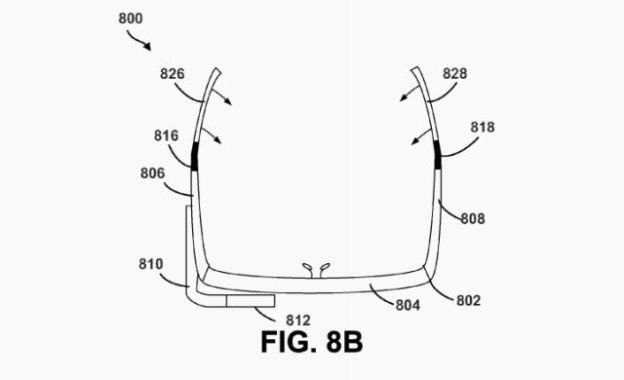
BGR.com - Google Glass may have been a dud but that doesn’t mean Google is done making our glasses smarter. Quartz draws our attention to a new patent awarded to Google this week that could potentially solve problems that have plagued people who wear glasses for centuries.

The technology outlined in Google’s patent describes using motion sensors and tiny motors that will automatically detect where your head is angled and adjust the glasses so they’ll stay fitted to the bridge of your nose.
“In Google’s idea, the new glasses would have an actuator — a little motor for controlling movement — in each arm that could bend the arms in or out as needed, rather like the way a bendy straw works,” Quartz explains. “When the glasses detect that their wearer is bobbing up and down at an increased rate—while running, for example—the arms contract to grip the wearer’s head.”
This sounds very cool, but how, exactly would these glasses be powered? Quartz’s report doesn’t say, although from the look of the diagram in the patent filing, it seems this particular invention was designed specifically for future Google Glass-type devices.

glasses-patent

In other words, it sounds like these kinds of smart glasses are just one more gadget you’ll have to charge at the end of the day along with your laptop, smartphone and smartwatch.

Hooray.

May 2, 2015

In South Korea's "Smart City" of Songdo, Children are Tracked by Microchip and the Government Monitors CCTV Cameras Located Throughout the City


At Songdo’s U-Life Center, a wall of screens streams real-time footage from the CCTV cameras located throughout Songdo, so that "government officials can monitor traffic and spot crime."  (Ross Arbes)

Songdo, South Korea: City of the Future?

Gale International, holds a majority stake of 61%, Posco 30%, and the remaining 9% is owned by Morgan Stanley Real Estate. The plan was designed by the New York office of Kohn Pedersen Fox (KPF). Infrastructure development, labor, and funding are also being provided by the city of Incheon.

 September 27, 2014

The Atlantic - Some of the developers of Songdo (which means “island of pine trees”) call it “The City of the Future.” Others have dubbed it “The World’s Smartest City” and “Korea’s High-Tech Utopia.” What, if anything, might such a city have in store for a tourist?

By the time we touched down at Incheon Airport in May, we knew Songdo’s short history. In 2000, it was still a marshy stretch of tidal flats in the Yellow Sea, home to a scattering of fishermen. Three years later, the Korean government filled it with 500 million tons of sand in an effort to build a business district near the international airport. (Seoul, the capital, is more than an hour away from the Incheon airport by bus; Songdo, an “aerotropolis” that boasts of being a short flight from one-third of the world’s population, is a mere 15-minute drive.) In addition to luring foreign business, the government hoped to create a sustainable city that demonstrated Korea’s technological prowess. Eleven years, $35 billion, and a few economic downturns later, Songdo has completed some 60 percent of its planned infrastructure and buildings, developers say, and reached a population of about 70,000—a third of the number expected by 2018, when the city will be “done.”


April 6, 2015

Snowden Explains That the NSA's PRISM Program Collects Data from Tech Companies like Google, Facebook and Apple

Thanks to Edward Snowden, Americans now know that the CIA and NSA have spied on Americans citizens through Facebook since June 6, 2009 using a dubious FISA court judicial opinion. The CIA, through its private venture capital business In-Q-Tel, invests in “big data” projects with all of Facebook’s principal underwriters, investors and partners. NSA Prism program taps into user data of Apple, Google, Facebook and others. [Source]

Edward Snowden Explains How The Government Can Get Your 'D**k Pic' During Interview With John Oliver

April

Former NSA contractor Edward Snowden sat down for an interview with comedian John Oliver nearly two years after he leaked classified documents about U.S. government surveillance programs and fled to Russia to escape prosecution.
"I do miss my country. I do miss my home. I do miss my family," Snowden said.
Oliver, the host of HBO's "Last Week Tonight," encouraged Snowden to explain bulk surveillance in colloquial terms so the general public could better understand it. He showed Snowden a video of Americans who were concerned that the government improperly intercepted nude photos, or "dick pics," as part of its mass surveillance programs.
"The good news is that there's no program named the 'dick pic' program. The bad news... they are still collecting everybody's information, including your dick pics," Snowden said while stifling a chuckle.

"If you have your email somewhere like Gmail hosted on a server overseas or transferred overseas or anytime it crosses outside the borders of the United States, your junk ends up in the database," Snowden added.
Snowden then went on to explain the "PRISM" program, which collects data from tech companies like Google, Facebook, Apple and others.

March 22, 2015

Scannable Digital Driver's Licenses Using Biometrics Such as Fingerprints and Facial Recognition by 2016

The driver's license of the future is coming to your smartphone (Video)

A few states have begun the journey toward offering a digital version of your driver's license that would reside on your phone. But the going could be stop and go for a while.


CNET - The road ahead may soon lead to a digital driver's license on your mobile phone.

The printed plastic driver's license has been a standard for decades, acting not just as proof that you can drive but as an ID to verify your age and identity. Getting issued a license is a rite of passage for many a teenager. The license has a status that transcends mere motoring.

ddl.jpg
Your driver's license may one day be a mobile app. MorphoTrust
Now, just as concert tickets, airline boarding passes, Starbucks loyalty cards and even your wallet are migrating onto your smartphone, your driver's license seems headed down the same route.
"The world is changing, and a lot of transactions and activities that people do are now done in digital formats," said Mike Williams, chief of communications for the Department of Motor Vehicles in Delaware. "You can do so much with your smartphone. You can pay at the gas pump. You can go to the grocery store. You don't even need a debit card sometimes anymore. So this is just a movement in that direction."
Delaware is among several US states -- including the bellwether of California -- considering digital driver's licenses, and prototypes will go into pilot tests in some places this year. If those tests go well, the first smattering of virtual licenses could be offered to the public as early as 2016.

The digital version would resemble your printed license, with the same information, including your name, address and date of birth, along with a photo. And just as your printed license contains a scannable barcode so machines can read the information, so too would the digital version.

Your digital driver's license would also be more than just a static image of your regular driver's license. Instead, it would be a full-fledged mobile app with security protection and potentially real-time data downloaded directly from your state's Department of Motor Vehicles.

But for all the convenience that would offer, hazard lights are flashing for some critics. Do you want to hand your smartphone to a police officer if you get pulled over? If the officer can look at your license, what else would be accessible, and what would be off-limits?
"We have a number of serious, unresolved concerns about how the use of the smartphone as a driver's license may implicate privacy rights," said Rita Bettis, legal director for the ACLU of Iowa. "These include the rights to be free from unreasonable searches and seizures of one's phone and its contents during traffic stops."