September 15, 2015

Apple Pay, Android Pay, Samsung Pay, CurrentC Hoping to Incentivize People to Switch from Cash and Credit Cards to Mobile Payments

Apple Pay, One Year Later: Still Waiting to Catch On

September 7, 2015

 Ian Paul - One year ago, Apple introduced its long-expected mobile payment system, Apple Pay. The new payments platform lets iPhone 6, iPhone 6 Plus, and Apple Watch users pay for items at retail locations throughout the United States and the United Kingdom. Instead of swiping a card with a magnetic stripe at checkout, they can just tap their Apple Pay-compatible iOS device on a compatible terminal, and the transaction is done, the payment made from their selected credit or debit account.

Of course, the company would like Apple Pay to be the way we all buy everything at retail outlets in the future. But how many people have actually made that switch already? What can Apple do to convince others to do the same? And how will Apple Pay fare as new competitors come on line? In other words, one year later, how’s Apple Pay doing?

How it’s doing: Merchants

Twelve months after its announcement, Apple Pay’s early statistics appear promising. In the U.S., Apple expects the payments platform to be available at 1.5 million merchant locations by the end of 2015. In the U.K., Apple Pay was available at 250,000 locations when it launched there in July. Those numbers include major American retailers such as Macy’s, McDonald’s, Staples, and Walgreens, as well as big names in the U.K. such as Boots, H&M, and Vodafone.

On top of those merchants, Apple has nearly 450 U.S. banks signed up to support Apple Pay, including credit card provider American Express. In the U.K., nine banks now support Apple Pay. Payment start-up Square — which sells that small dongle that converts smartphones and tablets into digital cash registers — will also support Apple Pay with a new piece of hardware this fall.

How it’s doing:  Users

So Apple Pay is certainly out there. But, says Sucharita Mulpuru, a Forrester principal analyst who specializes in eCommerce and consumer behavior, “Regardless of how many companies accept it, what really matters is how many consumers are using it.”

In January, company CEO Tim Cook suggested — without providing much in the way of specifics — that adoption of Apple Pay was strong. “Apple Pay makes up more than two out of every three dollars spent on contactless payments across three major U.S. card networks,” Cook said during Apple’s Q1 2015 earnings call.

Sounds good, except that contactless payments including Apple Pay still represent just a fraction of all retail transactions. That, in turn, is partly due to the fact that Apple Pay for retail is only available to a relatively small group of users who own the latest iPhones or an Apple Watch. Apple being Apple, it doesn’t break down iPhone sales numbers by specific model, and it hasn’t provided any figures on Apple Watch sales yet. So it’s impossible to say how many people are even equipped to use Apple Pay in the first place.


Sources outside of Apple aren’t much help, either. Consumer surveys from PYMNTS.com and InfoScout say Apple Pay adoption is relatively stagnant, while a recent survey from Auriemma Consulting Group suggests Apple Pay usage is growing. Regardless, it’s clear that Apple Pay still provides just a tiny sliver of daily retail transactions.

(Apple did not respond to our requests for comment on this story.)

Changing habits, changing minds

September 13, 2015

New Patent Awarded to Google Is for an Invention Designed Specifically for Future Google Glass-type Devices

If you wear glasses, this Google invention may change your life

Google Smart Glasses Adjustment Patent

September 13, 2015

BGR.com - Google Glass may have been a dud but that doesn’t mean Google is done making our glasses smarter. Quartz draws our attention to a new patent awarded to Google this week that could potentially solve problems that have plagued people who wear glasses for centuries.

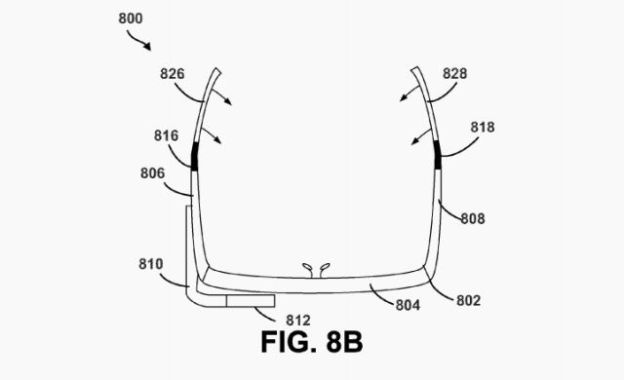
The technology outlined in Google’s patent describes using motion sensors and tiny motors that will automatically detect where your head is angled and adjust the glasses so they’ll stay fitted to the bridge of your nose.
“In Google’s idea, the new glasses would have an actuator — a little motor for controlling movement — in each arm that could bend the arms in or out as needed, rather like the way a bendy straw works,” Quartz explains. “When the glasses detect that their wearer is bobbing up and down at an increased rate—while running, for example—the arms contract to grip the wearer’s head.”
This sounds very cool, but how, exactly would these glasses be powered? Quartz’s report doesn’t say, although from the look of the diagram in the patent filing, it seems this particular invention was designed specifically for future Google Glass-type devices.

glasses-patent

In other words, it sounds like these kinds of smart glasses are just one more gadget you’ll have to charge at the end of the day along with your laptop, smartphone and smartwatch.

Hooray.

Iranians Are a Lot Like Israelis -- They Have Hopes and Fears and They Are Also Critical of Their Government

Here’s What An Israeli Journalist Has To Say About Iran After Meeting With Ayotallahs

The Jewish Forward’s Larry Cohler-Esses recently traveled to Iran, where he learned that, despite the cries of the Israel lobby and Benjamin Netanyahu, Iranians are a lot like Israelis -- they’ve got hopes and fears and they’re also critical of their government.


Mint Press News - Hassan Rouhani, Iran’s recently elected president, traveled to the United Nations two years ago and made an impressive entrance on the international stage. The Jewish Forward’s assistant managing editor, Larry Cohler-Esses, took advantage of this amazing opportunity and called the Iranian U.N. mission to request an interview with Iran’s leader.

Though that interview couldn’t be arranged, the press attachĂ© had an even more ambitious idea: Why didn’t Cohler-Esses apply for a visa, travel to Iran, see the country for himself, and then tell his readers about his experience?

He would be the first reporter for a Jewish newspaper, in either Israel or the United States, to visit Iran in decades.

Cohler-Esses, who is a friend and colleague, is an ambitious, inventive journalist who loves a challenge. He took up the cause, persuaded his editor to support the project, and began the two-year process that resulted in his week-long visit to Iran (video here) last month.

In many ways, this trip and the process leading up to it were a labor of love for Cohler-Esses. He and I have talked in the past about the time he spent teaching English as a Second Language in Iran during the period of upheaval leading up up to the Shah’s overthrow. We all have fond memories of particularly ambitious trips and adventures we took during our youth, when we were first spreading our wings and trying to figure out what to do with our lives. Iran was Cohler-Esses’ epiphany on the road to Damascus. It was one of the most important experiences of his life.

After returning home and collapsing from this most recent, exhaustive trip, during which he covered tens of thousands of flown miles and visited regions throughout the far-flung nation, he turned his voluminous notes, audio, video and still photography into a combination travelogue-political profile of a nation in transition.
Now he’s published a profile in the Forward and it’s a tour de force, but not in the same way that John Hersey’s New Yorker profile of the nuclear bombings of Hiroshima and Nagasaki was.  Larry’s piece is remarkable as a document of realism. It’s a report shorn of the dogma and posturing featured in so much American and Israeli media these days regarding the Iran nuclear deal.

For that reason, it’s a remarkable, must-read piece for anyone seeking a middle-ground in this debate so lacking in common sense. Immediately following completion of this assignment he turned around and flew to Israel for a family visit. While there, he also conducted several interviews with Israeli media about his Iran trip. Despite being inundated with anti-Iran propaganda by their far-right political leaders, Israelis are curious whether Iranians are the bogeymen Prime Minister Benjamin Netanyahu makes them out to be.

Cohler-Esses presented a remarkably nuanced portrait which told Israelis that the Iranians are much like them: They want peace. They want prosperity. They want the freedom to express themselves. They are skeptical of their leaders. They want change.

It’s an almost banal set of observations, but it’s practically revolutionary in the Israeli context.

The Forward correspondent, though assigned a minder and translator by the Iranian government, was given free rein to determine where to go, who to meet, and what to ask. He was not restricted in any way. His interlocutors returned the favor by being tremendously candid. They spoke openly of their likes and dislikes, including their own government. Many criticized the very Ayatollahs portrayed so tyrannically by the Israeli hasbara apparatus.

Iran even has something that hasn’t existed inside Israel in a meaningful way for decades: a progressive clerical movement. Grand Ayatollah Yousef Saanei derided the Iran nuclear deal as not going far enough. He said it was a deal concerning little more than money, when it should’ve encompassed human rights, domestic liberalization and political reform. He appeared miffed that the U.S. and Western powers had missed a golden opportunity to negotiate a loosening of the regime.

The Forward editor met many Iranian leaders, some of whom were pragmatic and some of whom were dogmatic in their attitudes toward America and Israel. Yes, there was one anti-Zionist leader, who believed Israel must either be transformed into a single unitary state or destroyed, but the rest of his interlocutors were a diverse lot who understand the difference between a government and its people. They, by and large, didn’t blame Israelis for the injustices of Israeli policy toward Arab states and Palestinians. They didn’t blame individual Americans for the policies of past administrations which demonized their country.

Israel and Iran: Mirror images

Profiles about Israel and Iran rarely note the enormous social, political, religious and psychic similarities between them. Both are states where religion plays a pivotal role, and where a single religion predominates and informs law, politics, and other arenas.

Jordan and Egypt, the Only Arab Countries to Have Peace Treaties with Israel, Condemn What They Describe as an Assault by the Israeli Army at Al-Aqsa Mosque

Jordanian King Abdullah II on September 20, 2015 indicated to a visiting delegation of Arab MKs from the Joint List that he was following events on the Temple Mount closely and it would be an important subject in meetings with world leaders at the UN next week. The king told the delegation of five visiting Joint List MKs that the Aksa Mosque was a place for Muslim prayer, with no division or partnership. The previous week Abdullah warned Israel that any further “provocation” in Jerusalem  would damage ties between the two countries, AFP reported. “Any more provocation in Jerusalem will affect the relationship between Jordan and Israel,” Abdullah said. Jordan and Israel signed a peace treaty in 1994. “Jordan will not have a choice but to take actions, unfortunately,” he said at a press conference in Amman with visiting British Prime Minister David Cameron.

Clashes rock Jerusalem's Al-Aqsa mosque compound

September 13, 2015

AFP - Muslims and Israeli police clashed at Jerusalem's flashpoint Al-Aqsa mosque compound Sunday hours before the start of the Jewish New Year, the latest violence over access to the site sacred to both faiths.

The clashes came with tensions running high after Israeli Defence Minister Moshe Yaalon last week outlawed two Muslim groups that confront Jewish visitors to the compound.
 
The defence minister last week banned the Murabitat and Murabitun groups, which his office said were "a main factor in creating the tension and violence" at the compound.

Non-Muslims are allowed to visit the compound, but Jews must not pray or display national symbols for fear of triggering tensions with Muslim worshippers.

Muslims fear Israel will seek to change rules governing the site, with far-right Jewish groups pushing for more access and even efforts by fringe organisations to erect a new temple.
 
Israel seized east Jerusalem, where Al-Aqsa is located, in the Six Day War of 1967 and later annexed it in a move never recognised internationally.

Palestinian president Mahmud Abbas condemned what he called an Israeli police "attack" at the site, while Israeli Prime Minister Benjamin Netanyahu said authorities must prevent rioting there.

Muslim witnesses said police entered the mosque, Islam's third-holiest site, and caused damage. Police said they only closed its doors to lock in rioters throwing stones, fireworks and other objects.

A police statement said the rioters barricaded themselves in the mosque overnight with the aim of disrupting visits by Jews to the site ahead of the start of New Year celebrations on Sunday evening. It said police raided the compound at around 6:45 am (0345 GMT) to ensure visits could go ahead as usual. Protesters then targeted police from inside the mosque.
"Masked protesters who were inside the mosque threw stones and fireworks at police," it said. "Suspect pipes that could be filled with homemade explosives were also found at the entry to the mosque."
Protesters have previously used such pipes to direct the trajectory of fireworks.

A Muslim witness accused police of entering the mosque much further than would have been needed to close the doors and of causing damage, saying prayer mats were partly burned. Witnesses also said a number of windows were broken.

September 9, 2015

The 13 Bloodlines of the Illuminati

For we wrestle not against flesh and blood, but against principalities, against powers, against the rulers of the darkness of this world, against spiritual wickedness in high places. - Ephesians 6:12 KJV
Meyer Rothschild died on September 19, 1812. In his will he spelled out specific guidelines that were to be maintained by his descendants: This rule became less important in later generations as they refocused family goals and married into other fortunes.

In 1773, when Mayer Rothschild was only thirty years of age, he invited twelve other wealthy and influential men to meet him in Frankfort. His purpose was to convince them that if they agreed to pool their resources they could then finance the world revolutionary movement and use it as their Manual of Action to win ultimate control of the wealth, natural resources, and man-power of the entire world.

The following are excerpts from the meeting of the twelve who were in fact planning the French Revolution:
“By the laws of nature right lies in force. Our right lies in force. Only a despotic ruler can rule the mob efficiently, because without despotism there can be no existence for civilization which was carried out not by the masses, but by their guide, who-so-ever that person might be. The moment the mob seizes freedom in its hands it quickly turns to anarchy.”

[Order out of chaos, have we not readily surrendered our freedom in order to procure safety from the anarchy that has been created by the agents of the international corporate mafia?]

“On the ruins of the natural and genealogical aristocracy of the goyim, we have set up the aristocracy of money. The qualification for this aristocracy is wealth which is dependent upon us.”

“Thanks to the press, we have got gold in our hands, notwithstanding the fact that we had to gather it out of the oceans of blood and tears…but it has paid us, even though we have sacrificed many of our own people. Each victim on our side is worth a thousand goyim.”

“By executing the criminal and lunatics after they have carried out our preconceived reign of terror, we can make ourselves appear as the saviors of the oppressed and the champions of the workers. We are interested in just the opposite…in the decimation, the killing out of the goyim. Enforced unemployment and hunger, imposed on the masses because of the power we have to create shortages of food, will create the right of capital to rule more surely than it was given to the real aristocracy, and by the legal authority of kings.” 
[Source]

The Kennedys [Excerpt]

Fritz Springmeier
May 1993 with September 2003 Updates

Because there is so much disinformation out about the people who run this country, it must sometimes seem rather bizarre that people like me come along and say there is a satanic conspiracy of great magnitude. If Americans were as a whole critical thinkers and would challenge the propaganda that the controlled media gives them, then the false fronts and false public images of their leaders might not get written up so easily as history. There are not many critical thinkers in this nation. There are a great many intelligent people, but not a great many critical thinkers. A conspiracy of great magnitude has had this nation in its grips since the nation was founded, and the controlled press has managed to prevent the general population from finding this conspiracy out. The Kennedy Family has played a role in that conspiracy. John F. Kennedy (Jack/JFK) gave his life to that conspiracy.

The assassination of JFK is one of the best ways to introduce Americans to the conspiracy. Ralph Epperson, who gives talks/slideshows about the NWO to groups, likes to use the Kennedy Assassination as a method to get people to realize that there is a NWO conspiracy. Interestingly, a companion of Ralph Epperson, who helped him give presentations, was an active Monarch slave, although Epperson didn't know this at the time. It is difficult for those exposing the NWO to get away from being infiltrated. The Monarch mind-controlled slaves are very difficult to detect, especially since most people don’t even know that they exist.

MJ-12, a.k.a. the Wise Men, or the Study Group: This group of men actually run the United States. I know a good deal about the Study Group. In fact, if my sources are correct, it isn’t a formal group anymore. There are no formal meetings but, rather, meetings happen at random, with people "accidentally bumping into each other." MJ-12 draws members from the Jason Society and the Jason Group. Both the Jason Society and the Jason Group are named after Jason and the Golden fleece.

It is known that JFK was in direct contact with Meyer Lansky and Joe Fishetti, two Mafia chiefs, and that he benefited from money they passed onto him. This is no surprise since Jack’s father, Joseph Kennedy, had worked with the Mafia throughout Jack’s entire life. There are a number of respectable books by ex-Satanists and ex-Organized Crime members where they are clear about how those groups love to blackmail people. JFK certainly could have been easily blackmailed by these groups if they had wanted to. I haven’t seen any indication that blackmail was even tried, so the only other conclusion, which fits a lot of evidence, is that John F. Kennedy worked with the Satanists and the Mafia. In fact, the Mafia rigged several important counties in the election, like in Chicago, which tipped the scales for Jack winning the Presidency.

JOSEPH KENNEDY

Joseph Kennedy was John F. Kennedy’s father. Through various means, I independently learned that Joseph Kennedy was part of the Illuminati. He was a member of the Pilgrim Society (a 60 of the branch Illuminati). He also worked closely with the Mafia and other Kingpins in the Illuminati. Perhaps in another article we can cover more about Joseph Kennedy. This article is about long enough. I thought I might wrap it up with a story about Joseph Kennedy. The story demonstrates that much of what politicians tell the public is simply for their own benefit and often only lies.

JFK got the reputation as being against the United States entering the war after Britain and Germany began fighting in WW II. JFK held the prestigious job of being the U.S. ambassador to Great Britain at the time. The fact that Jack Kennedy was given such an extremely vital position shows that the Kennedy family is important within the Illuminati.

At that point in time, like no other time, it was important who the U.S. had as ambassador. After the war began, and both countries had martial law and extensive military communications, the ambassador was really not quite so critical in his role. One of the men who worked at the embassy for the Americans was an American, Tyler Gatewood Kent, a career officer in the U.S. Consular service. Tyler Kent believed in a world conspiracy before he began working in the code room. While he worked there he was astonished that Roosevelt was secretly involving the United States in WW II and lying to the American public. Further, Roosevelt was pulling strings to get us involved while lying to the public. Kent secretly took 1,500 pages of secret documents, which he was going to show to the public to expose the conspiracy. Kent never made it. He was arrested. In order for the British to hold him, JFK had to revoke his diplomatic immunity on May 20, 1940.

Ambassador Kennedy did that so Kent would receive a harsh sentence, because if Kent had been brought back to America, the public might have gotten outraged at what the politicians had done. According to Standard Operating Procedure and protocol, Kent should have stood trial in the U.S. The papers he had taken were American embassy papers, not British. Although the court records show that no evidence was introduced that Kent was a spy, Joseph Kennedy later would concoct a long story for the public that Kent was a Nazi spy.

China Admits That Its Stock Market Was a Bubble That Has Burst

China just gave the game away

September 8, 2015

Business Insider - Chinese leaders expressed deep concern for their country's economy last weekend at a meeting of G-20 nations in Ankara, Turkey.

That is weird for two reasons.

First, China's leaders are normally incredibly confident about their economy in public.

Second, amid the worry — despite the Chinese economy's visible slowdown and dramatic action over the past month — officials maintained that the economy would continue to grow at 7% annually.

Basically, that means Chinese officials just gave the game away: They expect us to believe that the country's economy will close this year growing the same way it did last year: 7%, always 7%.

Something here doesn't fit.

Here's what they said

The reports started leaking out on Friday, when Japan's finance minister, Taro Aso, revealed that Zhou Xiaochuan, governor of China's central bank, had repeated several times in a meeting that the Chinese stock market bubble had "burst."

This is the same stock market that the government helped inflate and has since been trying to prop up. Goldman Sachs strategists estimate that China's "national team" of state-backed brokerages and funds has pumped about $240 billion into the stock market since June.

It is also the same stock market that China has been trying to "purify" and that has been falling because foreign investors don't understand China's growth model, according to Chinese media.

Admitting that the market was a bubble, and that it has now popped, is a big step.

Of course, that's just the stock market — a stock market in which only 5% of Chinese people are invested. Far worse is what was reportedly said about the country's real economy.

According to Japan's Nikkei news service, Chinese finance minister Lou Jiwei told a group of delegates that China would face up to 10 years of tough economic conditions. The next five years, he said, would most definitely be painful.

That doesn't tally with the 7% growth target China keeps repeating, a target that China's richest man has dubbed a fantasy.

Contrast what was said this weekend with what you read in China's state media and you get a picture of policy going forward. It's not pretty at all. It is the picture of the government whose carefully laid plans have gone awry.

The plan goes awry

Right now, China is trying to move its economy from one based on foreign investment to one based on domestic consumption. Leaders knew that as this happened, the economy would slow down.

Palestinian President Will Tell the U.N. That Palestinians Will No Longer Abide by the 1993 Oslo Accords Because Israel Has Failed to Move Toward the Creation of a Palestinian State

Palestinian Leadership Considers Annulling Oslo Peace Accords With Israel at U.N.


Newsweek - Palestinian President Mahmoud Abbas is considering opening a "new chapter in Palestinian history" in his U.N. General Assembly speech later this month, with the Palestinian leadership "in favor" of voiding the Oslo peace accords with Israel, a Palestine Liberation Organization (PLO) official, speaking on condition of anonymity, said on Monday.

The Oslo Accords, the first signed in 1993 and the second in 1995, outlined a peace process between Israel and the Palestinians with the aim of fulfilling the "right of the Palestinian people to self-determination."

The accords created the Palestinian Authority (PA), which today controls the West Bank and coordinates with Israel on security matters. It also created Areas A, B and C of the West Bank, with A under the PA's control, C under Israeli control and B under shared control.

PLO executive committee member Ahmad Majdalani told Palestinian news agency Maan News on Sunday that Abbas will tell the U.N. that the Palestinians will no longer abide by the Oslo Accords because of the failure of Israel to move towards the creation of a Palestinian state, as outlined in the 1993 agreement.

However, a PLO official, speaking to condition of anonymity to Newsweek because he was not authorised to speak to the media, said that the decision has not yet been made by the Palestinian leadership to move head with the symbolic act. The official confirmed that discussions over the move are continuing and that it has support from the majority of the Palestinian leadership.
"What Majdalani said, it's something that is being studied and is very popular. Most of the leadership are in favour of that," the official said.

"I think that the president, when it comes to an issue like this, does not comment until the decision has been made," the official added. "But what I can tell you is what Majdalani said is indeed being discussed and I think that people would be surprised if I told you the names pushing for it."
The official also said that the annulment of agreements on security cooperation between the PA and Israel was also under discussion.

In addition to the voiding of the Oslo Accords, Abbas is expected to announce that Palestine is a state under occupation, according to The Times of Israel, which also reported that Saeb Erekat, secretary-general of the PLO's executive committee, was behind the move against Israel and had decided on this several months ago. Announcing that "Palestine" is a "state under occupation" would be a controversial move because there are a number of countries that do not recognise it as a state and its borders are still not defined.

September 8, 2015

After 22 Years of Negotiations, There is Still No Peace Solution Between Palestine and Israel

US-Israel spat over Iran deal may sideline Palestinians

September 7, 2015

AP - In recent months, many in the Middle East had assumed — some in hope, others with concern — that once the Iranian nuclear issue was resolved, the United States would make another push for peace between Israel and the Palestinians. But the opposite seems more likely.

After a drawn-out confrontation with Prime Minister Benjamin Netanyahu over the Iranian nuclear deal, the White House seems to have little appetite for what would almost certainly be a new round of tensions with the Israeli leader over the terms of Palestinian statehood. With the odds of success slim and U.S. elections approaching, President Barack Obama seems more interested in repairing his tattered relationship with Israel, leaving the Palestinian issue to his successor.

In recent comments, Obama has spoken of boosting security cooperation and providing upgraded military hardware to make up for Israeli misgivings over the nuclear deal. Speaking to the Jewish newspaper The Forward last week, he likened his differences with Israel to a disagreement inside a family and predicted relations would survive the test.
"I think it is important for everybody to just take a breath for a moment and recognize that people on both sides of the debate love the United States and also love Israel," Obama said. 
He made no mention of the Palestinian issue.

A U.S. State Department official told The Associated Press that the U.S. is not planning any bold new diplomatic initiatives after the Iran deal makes its way through Congress. He spoke on condition of anonymity because he was not authorized to speak to the media.

In Israel, there had been speculation that Obama might act otherwise.
"Now that President Barack Obama has got his Iran deal ... he will likely also try, in the year and four months until the presidential elections, to turn his attention to other urgent regional issues, such as Syria, and the talks or lack thereof between Israel and the Palestinian Authority," Israeli commentator Avi Issacharoff wrote in the Times of Israel in July.
The Palestinians have also said they have received vague assurances from the U.S. that they have not been forgotten.

Several factors argue against another White House push to end Israel's half-century-old occupation of Palestinians.

First is Obama's apparent eagerness to make amends after a period of startling acrimony symbolized by Netanyahu's controversial speech to Congress in March, when he railed against the emerging nuclear deal. Netanyahu has only stepped up his criticism since the deal was sealed in Vienna in July, having his ambassador to Washington lobby against the agreement in meetings with American lawmakers. Even after Obama secured the needed support in Congress to uphold the deal last week, Netanyahu vowed to continue fighting it.

September 2, 2015

The Case for Keeping Interest Rates as Low as Possible for as Long as Possible


A dangerously misleading idea threatens to derail the American economy

August 27, 2015

Vox - The US economy got some great news Thursday morning when revised numbers indicated that the economy grew 3.7 percent in the second quarter. That same report carried zero indication that inflation is getting out of hand, but nonetheless was greeted with speculation that it might induce the Federal Reserve to raise interest rates sooner rather than later. After all, good news indicates that the economy can survive without life support.

When you see a person in the hospital with oxygen tubes in her nose and a saline drip in her arm, you assume the doctors have done this for some good reason. Most likely, if the tubes were removed the patient's health would be in serious jeopardy. But all else being equal, having tubes stuck in you is a pretty crappy situation. It's uncomfortable, and it limits your mobility. As soon as it's safe, you'd want to pull the tubes out. Now that the emergency created by the 2008 financial crisis is over, some people are anxious to pull the tube out and let the patient get back to living a normal life.

But there's actually no reason to think low interest rates are a problem for the US economy. Low interest rates reduce the federal deficit, encourage entrepreneurship, and boost economic growth. As long as inflation stays low — and right now, it's extremely low and likely to stay that way for a long time — we should relax and enjoy the benefits.

The perverse urge to normalize

As of a couple of weeks ago, the overwhelming conventional wisdom was that at its next meeting in September the Federal Reserve would finally raise interest rates for the first time since house prices started to collapse more than seven years ago. Then the financial trauma coming out of Asia cast doubt on that. William Dudley, the influential president of the New York Fed, said recent events made a rate hike "less compelling," and, partly as a result, US markets have been soaring ever since.

But Dudley also said, "I really do hope we can raise interest rates this year," and, most of all, that there's no reason to be thinking about new efforts at monetary stimulus: "I’m a long way from quantitative easing. The US economy is performing quite well."

This central analytic mistake is repeated daily on financial television shows, on "finance Twitter," in the business press, and apparently in staff-level discussions in the Federal Reserve. The conceit is that raising interest rates is a good thing, and the Fed should do it as soon as possible. Debate is entirely focused on whether higher rates would be catastrophic. Any good economic news counts as a reason to think they wouldn't be and therefore should come sooner.

In order to make it seem more obvious that higher interest rates are good, proponents of higher interest rates have taken to calling higher interest rates "normalizing" monetary policy. Normal things are good, right? Who could be against normal?

The case for low interest rates

But this is both totally wrong and a remarkably recent idea.

August 28, 2015

VIDEO: Black Man Pulled Over by White Cop for 'Making Direct Eye Contact'

In 2015, 1,134 black men were killed by police in the United States, including several high profile cases like Tamir Rice, the 12 year-old shot by the Cleveland, Ohio police, Walter Scott, shot by a police officer in North Charleston, South Carolina, and Laquan McDonald, shot 16 times by a Chicago, Illinois police officer. In the case of McDonald, while the shooting took place in 2014, the case became a public sensation in November 2015 with the release of a dashcam video that allegedly contradicted the police reports. [Source]

This Black Driver’s Mistake Was Looking a Police Officer in the Eye


August 28, 2015

Slate - John Felton was driving to his brother’s house in Dayton, Ohio, on a recent night when he noticed a police car tailing him. Not wanting to give the officer any excuse to pull him over, Felton, who is black and was visiting Dayton from Michigan, tried to drive extra carefully. But the effort was insufficient: Soon after making a turn, Felton was forced to stop his car and show the officer his driver’s license.

It turned out Felton had not switched on his turn signal at the exact right moment; as you can see from the video Felton made of the encounter and sent to talk show host David Pakman, the white officer told him he had failed to signal within 100 feet of making his turn.

But why, Felton wanted to know, had the officer decided to follow him in the first place? That’s when the stop went from being an ordinary illustration of racial profiling to an extraordinary one.
"You made direct eye contact with me and held onto it when I was passing you," the officer told Fenton. 
The implication was that Fenton had marked himself as a suspicious character simply by looking at the officer.

Update, Aug. 28, 5:10 p.m.: The city of Dayton put out a statement about the incident, acknowledging that "making direct eye contact with an officer is not a basis for a traffic stop.” The statement implies—but doesn’t say outright—that in pulling Felton over for not signaling within 100 feet of a turn, the officer was complying with a Dayton police initiative called "Safe Communities Through Aggressive Traffic Enforcement,” aimed at reducing traffic-related fatalities. The statement also says that the police department "is in contact with Mr. Felton,” and that he "has agreed to a conversation with the officer, facilitated by the Dayton Mediation Center” that will "allow Mr. Felton and the Officer to discuss the specifics of the incident.”

For those who have been following the past year in race relations between police officers and black people, that will sound familiar: Making eye contact with cops was also what set off a chase in Baltimore that ended with Freddie Gray sustaining fatal injuries in the back of a van.

During a eulogy, the Rev. Jamal Bryant to say the following to Gray’s mother:
On April 12 at 8:39 in the morning, four officers on bicycles saw your son. And your son, in a subtlety of revolutionary stance, did something black men were trained to know not to do. He looked police in the eye. And when he looked the police in the eye, they knew that there was a threat, because they're used to black men with their head bowed down low, with their spirit broken. He was a threat simply because he was man enough to look somebody in authority in the eye. I want to tell this grieving mother ... you are not burying a boy, you are burying a grown man. He knew that one of the principles of being a man is looking somebody in the eye.
John Felton made it out of his encounter with the Dayton police officer with only a citation. As you can see from watching his video, he knew it could have been worse.
“No disrespect—I don’t have nothing against police officers,” Felton said after being pulled over. “But with all the shit that’s going on, that’s some scary shit, to have a police officer just trailing you.”
Not that he was surprised—you can hear him say “Didn't I say he was going to do this?” to his brother at the beginning of the interaction. Nor should he have been. According to the book Pulled Over: How Police Stops Define Race and Citizenship, a sociological study of traffic stops in the Kansas City metropolitan area, black people are much more likely to be pulled over for so-called investigatory stops—in which the purported violation is extremely minor, like failing to signal, as opposed to serious, like driving drunk—than white people. As my colleague Jamelle Bouie wrote after the murder of Walter Scott in South Carolina—following a traffic stop for a busted taillight—the study found that more than half of all stops for blacks were for minor violations, as opposed to just 34 percent of stops for whites. 
TIP: Be like most cops and wear sunglasses, and then they can't accuse you of making direct eye contact. Also, when pulled over, always have your hands in front of you, on the steering wheel, where they can see them.

Federal Reserve Might Not Raise Interest Rates in September Due to China's Slowing Economy

China is the biggest holder of reserve assets in the world, holding a combination of bonds, currencies and commodities like gold. It held $1,271 billion in U.S. Treasurys at the end of June 2015, according to data from the Treasury Department. Societe Generale analysts estimate that the People's Bank of China (PBoC) has sold at least $106 billion of U.S. reserve assets since announcing its currency devaluation on August 11, 2015. China had cut its holdings of U.S. Treasurys to raise the U.S. dollars needed to support the yuan. [Source]

China has officially ruined everything for everybody [Excerpt]

August 27, 2015

Quartz - We know China is big. By some measures, China is now a bigger chunk of the global economy than the US.

But it’s also slowing.

atlas_NJdpPng9@2x

This slowdown matters. A lot. China is the world’s largest consumer of—in no particular order—copper, steel, iron ore, automobiles, aluminum, mobile phones, nickel, rice, tobacco, meat, Swiss watches, television, rubber, potash, energy, robots, beer, machine tools, red wine, flavored milk, rare earths, wheat, coal, as well as plenty of other raw materials and products.

And because of China’s seemingly endless demand for such sundries, companies—and entire countries—have built their business and economic strategies around catering to the People’s Republic.
That means China’s problems are the world’s problems.

The US economy is not built around supply exports to China. So, in that sense, the country enjoys a bit more insulation from China than many others.

But the US does import a lot of stuff from China, and one of the most important imports—at least lately—has been deflation.

Because of slack conditions in the Chinese industrial sector, producer prices—prices of goods as they leave the factory gate—have been tumbling.

That, along with the devaluation of the Chinese currency, should put further downward pressure on US import prices.

Ostensibly that’s a good thing for consumers.

On the other hand, that deflationary pressure will make it even more difficult for the Federal Reserve to achieve its goal of getting inflation up to a level where it feels like it can raise interest rates. Inflation remains abnormally low, largely due to low oil prices. But the Chinese situation won’t help matters either.

Markets are now much less sure that the Fed will finally start raising interest rates for the first time in roughly nine years in September.

August 26, 2015

Former U.S. Soldiers and Increasingly Militarized Police Forces

The military defends the nation from abroad; cops defend it from within. Ninety-nine percent of the work a cop will do is traffic stops, investigations, and show of force. They do train to use their weapon if needed, but firefights are not the bread and butter of their job. Infantry in the military, on the other hand, trains for combat, mainly large scale combat. The military doesn't teach you how to restrain people or prevent injuries to your combatants. A board established by Gov. John Kasich is considering ways to make needless use of violence by law enforcement officers less common. Suggestions, some already adopted by the General Assembly, have included better education requirements and improved training. Another idea, one the board is studying, is standards for when police officers and sheriffs' deputies can use force. All of this will help. But the bottom line - individual officers' psychological traits - has not received adequate attention. Is a certain officer easily rattled in stressful situations? Does another enjoy harassing people? Is yet another given to using his weapons even if they are not necessary? And how can law enforcement officials tell these things about their officers and deputies? There is a difference between the military and police, of course, and it is an excellent reason for Kasich's panel to talk to the Pentagon: On the streets, deadly force should always be a last resort. In fact, one prized character trait in the military - aggressiveness - is a drawback in law enforcement. You may not want a soldier who is courteous, patient and understanding, but those aren't bad things to have in a cop. [Source]

Cops or soldiers? [Excerpt]

March 22, 2014

The Economist - Civil libertarians such as Radley Balko, the author of “Rise of the Warrior Cop”, fret that the American police are becoming too much like soldiers. Special Weapons and Tactics (SWAT) teams (ie, paramilitary police units) were first formed to deal with violent civil unrest and life-threatening situations: shoot-outs, rescuing hostages, serving high-risk warrants and entering barricaded buildings, for instance. Their mission has crept.

Peter Kraska, a professor at Eastern Kentucky University’s School of Justice Studies, estimates that SWAT teams were deployed about 3,000 times in 1980 but are now used around 50,000 times a year. Some cities use them for routine patrols in high-crime areas. Baltimore and Dallas have used them to break up poker games. In 2010 New Haven, Connecticut sent a SWAT team to a bar suspected of serving under-age drinkers. That same year heavily-armed police raided barber shops around Orlando, Florida; they said they were hunting for guns and drugs but ended up arresting 34 people for “barbering without a license”. Maricopa County, Arizona sent a SWAT team into the living room of Jesus Llovera, who was suspected of organizing cockfights. Police rolled a tank into Mr Llovera’s yard and killed more than 100 of his birds, as well as his dog. According to Mr Kraska, most SWAT deployments are not in response to violent, life-threatening crimes, but to serve drug-related warrants in private homes.

He estimates that 89% of police departments serving American cities with more than 50,000 people had SWAT teams in the late 1990s—almost double the level in the mid-1980s. By 2007 more than 80% of police departments in cities with between 25,000 and 50,000 people had them, up from 20% in the mid-1980s (there are around 18,000 state and local police agencies in America, compared with fewer than 100 in Britain).

The number of SWAT deployments soared even as violent crime fell. And although in recent years crime rates have risen in smaller American cities, Mr Kraska writes that the rise in small-town SWAT teams was driven not by need, but by fear of being left behind. Fred Leland, a police lieutenant in the small town of Walpole, Massachusetts, says that police departments in towns like his often invest in military-style kit because they “want to keep up” with larger forces.

The courts have smiled on SWAT raids. They often rely on “no-knock” warrants, which authorize police to force their way into a home without announcing themselves. This was once considered constitutionally dubious. But the Supreme Court has ruled that police may enter a house without knocking if they have “a reasonable suspicion” that announcing their presence would be dangerous or allow the suspect to destroy evidence (for example, by flushing drugs down the toilet).

Read the whole thing

Watch the video:


With Aid of the Pentagon, Police Develop Military Mind Set [Excerpt]

September 12, 1999

Diane Cecilia Weber - Since 1981, when Congress passed the Military Cooperation with Law Enforcement Official Act, the military has become increasingly involved in civilian law enforcement, and has been encouraged to share equipment, training, facilities and technology with civilian enforcement agencies.

Who are the Psychopaths That Rule the World, the Tiny Occult Elite?


The Corbett Report
Published on March 15, 2013

SHOW NOTES: http://www.corbettreport.com/?p=7094

In this sixth part of the ongoing Sibel Edmonds Gladio B conversation, we ask the question: Who is at the top of the pyramid. We look beyond the usual suspects and follow the money back to the industries and lobbies whose existence depends on the perpetuation of boogeymen enemies.

Follow the money, which gives you power. The winners of war are the people who are able to make a lot of money from it. Follow the money to see who are the ultimate winners. Look at the War Industry [Boeing, Raytheon, Lockheed Martin, Northrup Grumman, etc.], Oil, Financial Institutions [Goldman Sachs, JP Morgan Chase, etc.], and Heroin [the CIA traffics heroin and other drugs and uses the drug money to fund covert operations].


August 24, 2015

Germany Initiates Move to Ban GMO Crops

Germany starts move to ban GMO crops: ministry letter

August 24, 2015

Reuters - Germany has initiated a move to stop the growing of genetically modified crops under new European Union rules, documents seen by Reuters showed on Monday.

German Agriculture Minister Christian Schmidt has informed German state governments of his intention to tell the EU that Germany will make use of new "opt-out" rules to stop GMO crop cultivation even if varieties have been approved by the EU, a letter from the agriculture ministry seen by Reuters shows.

A new EU law approved in March cleared the way for new GMO crops to be approved after years of previous deadlock. But the law also gave individual countries the right to opt out by banning GMO crops even after they have been approved as safe by the European Commission.

Widely-grown in the Americas and Asia, GMO crops have divided opinion in Europe. Britain is among those in favor of them, while France and Germany are among those opposed.

Previously, when the EU approved crops as safe to produce they had to be permitted for cultivation in all EU states.

In the letter, the ministry stressed that Schmidt is continuing a previously-announced policy to keep a ban on GMOs in Germany.

Under the new EU rules, countries have until Oct. 3, 2015, to inform the Commission that they wish to opt out of new EU GMO cultivation approvals, the ministry letter said.

Schmidt has asked German state authorities to say by Sept. 11 whether their region should be included in the opt-out, the letter said.

August 22, 2015

Iran Unveils New Missile and Says It Seeks Peace Through Strength

Iran unveils new missile, says seeks peace through strength


The defense ministry's unveiling of the solid-fuel missile, named Fateh 313, came little more than a month after Iran and world powers reached a deal that requires Tehran to abide by new limits on its nuclear program in return for Western governments easing economic sanctions.

According to that deal, any transfer to Iran of ballistic missile technology during the next eight years will be subject to the approval of the United Nations Security Council, and the United States has promised to veto any such requests. An arms embargo on conventional weapons also stays, preventing their import and export for five years.

But Iran has said it will not follow parts of the nuclear deal that restricts its military capabilities, a stance reaffirmed by President Hassan Rouhani on Saturday.

"We will buy, sell and develop any weapons we need and we will not ask for permission or abide by any resolution for that," he said in a speech at the unveiling ceremony broadcast live on state television.

"We can negotiate with other countries only when we are powerful. If a country does not have power and independence, it cannot seek real peace," he said.
The defense ministry said the Fateh 313, unveiled on Iran's Defence Industry Day, had already been successfully tested and that mass production would start soon.

Iran has one of the largest missile programs in the Middle East. It wants to export arms to its allies in the region and import anti-missile systems to prevent any possible attack by its arch-foe Israel.

Israel's Former Defense Minister Says Netanyahu Pushed to Attack Iran at Least Three Times in the Past Few Years

Netanyahu pressed for Iran attacks, but was denied: ex-defense chief

August 22, 2015

Reuters - Israel's political leaders pushed to attack Iran at least three times in the past few years but had to back down on the advice of the military and due to concerns about its ally the United States, former defense minister Ehud Barak said.

In interviews to his biographers aired late on Friday by Israel's Channel Two, Barak said he and Prime Minister Benjamin Netanyahu had wanted military operations against Iranian nuclear facilities in 2010, 2011 and 2012.

Israel has regularly hinted it could attack Iran to stop it getting nuclear weapons, something Teheran denies it is seeking.

In 2010, the Israeli leadership wanted an attack but the military said it did not have "operational capability," said Barak, defense minister between 2007 and 2013, and prime minister in 1999-2001.

In 2011, two ministers in a top security forum convened to discuss an attack changed their mind and decided against it, Barak said.

In 2012 the timing coincided with a joint military exercise with the United States. "We intended to carry it out," Barak said, but going ahead with an attack on Iran while U.S. forces were conducting the exercise would have been bad timing.
"You're asking and demanding America to respect your sovereignty when making a decision to do it even if America objects and it's against her interests, you can't go in the opposite direction and force America in when they're here on a drill that was known ahead of time," Barak said.
Netanyahu's spokesman could not be reached for comment.

Like Israel, the United States, had said military action was an option if diplomatic efforts failed to prevent Iran developing nuclear weapons. The Obama administration says a deal agreed with Tehran in July will prevent Iran getting the bomb.

That agreement is opposed by Israel, which believes it will be ineffective and allow Tehran to exert greater international influence.

August 19, 2015

The Global Warming Cycle Ended in 1998

In a Geological Society of America abstract by Dr. Easterbrook, data showed we were in a global warming cycle from 1977 to 1998, at which time we entered into a new global cooling period that should last for the next three decades. The Pacific Ocean has a warm temperature mode and a cool temperature mode, and in the past century has switched back and forth between these two modes every 25-30 years. This is known as the Pacific Decadal Oscillation or PDO. In 1977 the Pacific abruptly shifted from its cool mode (where it had been since about 1945) into its warm mode, and this initiated global warming from 1977 to 1998. The PDO typically lasts 25-30 years and assures North America of cool, wetter climates during its cool phases and warmer, drier climates during its warm phases. The establishment of the cool PDO in 1998, together with similar cooling of the North Atlantic Oscillation (NAO), virtually assures several decades of global cooling and the end of the past 30-year warm phase.  

PDO typically lasts 25-30 years:

1. 1945 - 1977: PDO cool phase (27 years)
2. 1977 - 1998: PDO warm phase (21 years)
3. 1998 - 2028: PDO cool phase (30 years)

[Source]

clip_image002 

Water vapor is the overwhelming greenhouse gas [it is 30 to 50 times more important than carbon dioxide (CO2)], and CO2 attributed to man is minuscule. Yet government-paid scientists claim HUMAN-INDUCED CO2 is the primary climate driver and must be eliminated to save the earth. Of course man is prideful enough to think he is a major player when in actuality man is an insignificant producer of CO2.

The greatest amount of CO2 is locked up in plants, rocks and the oceans. It should not be surprising that these each contribute more CO2 emissions than any other sources. This is a good thing, since there is a relatively stable and finite amount of both oxygen and carbon on this planet.

If it weren’t for carbon dioxide, the earth could well be a frozen ball in space, and life, as we know it, would probably not be able to survive.

The largest emitters of carbon dioxide are volcanic eruptions, forest and wild fires, and natural decomposition of plants and animals. Thankfully, ocean water has a great propensity for absorbing this gas, and, as ice melts, it means that the oceans can take in a great deal more CO2.

1. The biggest source of CO2 emissions is volcanic eruptions. At any given time, according to agencies such as the USGS, there are about 13-17 volcanoes erupting somewhere on Earth.

2. Next in line for emissions is the natural decomposition of plant life.

3. The next biggest emitter of carbon dioxide is probably the ocean.

4. Other large emitters of carbon dioxide are forest and wild fires.

A person may wonder where man and animals fit into all of this. Animals and mankind breathe in oxygen and breath out CO2, and their bodies also contain CO2 and carbon, which is released when they die and decompose. Man burns fossil fuels, which release CO2 as a byproduct. Animals and mankind don’t produce nearly as much carbon dioxide as the major producers, with the possible exception of the death and decomposition of animals.

The instrument temperature records since 1850 or so (until satellite measures started in the 1970s) which are used to prove human-induced global warming (AGW) have been shown to be inaccurate, unreliable, and tainted by numerous errors. Dr. Don Easterbrook, Professor of Geology at Western Washington University, suggests that since the IPCC climate models are now so far off from what is actually happening, that their projections for both this decade and century must be considered highly unreliable.

No Global Warming for 17 Years, 6 Months – (No Warming for 210 Months)

March 4, 2014  

Lord Christopher Monckton, Climate Depot - Seventeen and a half years. Not a flicker of global warming. The RSS satellite record, the first of the five global-temperature datasets to report its February value, shows a zero trend for an impressive 210 months. 

The graph above shows no global warming at all for 17 years 6 months (as of March 2014):

Monctkon analysis: 

1: This graph is highly topical. It is right up to date. Remote Sensing Systems, Inc. (RSS) is one of the two satellite-based datasets (the other is the University of Alabama at Huntsville (UAH). And RSS is one of the five standard global temperature datasets, which include the two satellite datasets and the three terrestrial datasets – Goddard Institute for Space Studies (GISS); the Hadley Centre/CRU dataset, version 4 (HadCRUT4); and the National Climatic Data Center (NCDC). As this month, RSS is usually the first to report, and its latest monthly value, for February 2014, became available just hours ago. 

2: The satellite datasets are based on measurements made by the most accurate thermometers available – platinum resistance thermometers, which not only measure temperature at various altitudes above the Earth’s surface via microwave sounding units but also constantly calibrate themselves by measuring the known temperature of the cosmic background radiation, which is 1% of the freezing point of water, or just 2.73 degrees above absolute zero. It was by measuring minuscule variations of the cosmic background radiation that the NASA anisotropy probe enabled the age of the Universe to be determined: it is 13.82 billion years.

August 13, 2015

Netanyahu Wants to Retain Sanctions to Keep Iran Hobbled and Politically Outcast

Netanyahu doesn’t care about Iran getting the bomb

August 12, 2015

When politicians speak nonsense, it is a good bet that there is something else going on behind the scenes that cannot be said directly. 

Prime Minister Benjamin Netanyahu’s statements about the Iranian nuclear accord are nonsense. So what is really going on? One cannot know for sure, but things become a good deal clearer when we begin with a startling idea:  Netanyahu does not care whether Iran has the bomb. 

Israel has real enemies and real security worries. They just don’t happen to include Iran, which is far away and unlikely to intervene directly in Israel. Israel’s immediate security concerns are in Gaza and southern Lebanon, where it has repeatedly fought Hamas and Hezbollah. Iran provides millions of dollars of support, including weapons, to Israel’s enemies. It is altogether likely that that support will increase when and if the Iranian economy improves. American-led sanctions would continue to hobble that economy. 

Money and politics are what this dispute is about, not nuclear bombs. This is what Netanyahu will not say, for to focus on Israel’s real enemies is also to raise the issue of what more Israel could do to end the dispute with the Palestinians, which is at the heart of all of this. 

First, the nonsense. Netanyahu argues that the proposed deal will lead to a nuclear-armed Iran, which would threaten the very existence of Israel. He objects that Iran will be able to develop its centrifuge technology such that in 15 years, when the limits on nuclear production end, Iran will be in a position to quickly develop a bomb. He argues that the possibility of a 24-day procedural delay before inspectors can arrive to check out any alleged violation would allow Iran to cover up its illicit activities.

But the absurdities become apparent when you consider the alternative, Iran without an agreement. Suppose he is right that Iran can comply while still developing its nuclear knowhow, which would allow it to develop a bomb quickly at the end of the agreement. Yet without an agreement, Iran may be only months away from the construction of a bomb should it choose to go that route. How is 15 years not better than 15 months?

July 30, 2015

Ultimate Goal of the New World Order: "A Supranational Sovereignty of an Intellectual Elite and World Bankers"

Many of the people on earth today, especially those in charge of society, are materialists and atheists, consumed by fear, selfishness, violence, egotism, militarism, and greed, spiritually either deeply asleep or dead, destroying through negligence whole nations and even perhaps the planet we live on. A world where war is viewed as normal, where human beings knowingly and willingly torture other human beings to death then lie about it, where governments terrorize their own populations, where millions are deliberately subjected to addictive legal and illegal drugs, where the food supply is degraded for profit, where radiation is purposely introduced into the environment through devices like depleted uranium, where space is viewed as the ultimate high ground for weapons deployment, where assassination is official policy, where pandemics are declared to market dangerous vaccines, where trillions are lavished on financial institutions while families are denied adequate income, where initiative is smothered by taxes and regulations, where justice is bought and sold, where the laws favor mainly the rich, where the media put people to sleep with pablum and nonsense, and where the intellectuals justify the status quo is a world whose time is up. - Richard C. Cook, July 17, 2009

Is an International Financial Conspiracy Driving World Events?

By Richard C. Cook, Global Research
Originally Published on March 27, 2008

"They make a desolation and call it peace." -Tacitus

Was Alan Greenspan really as dumb as he looks in creating the late housing bubble that threatens to bring the entire Western debt-based economy crashing down?

Was something as easy to foresee as this really the trigger for a meltdown that could destroy the world’s financial system? Or was it done, perhaps, "accidentally on purpose"?

And if so, why?

Let’s turn to the U.S. personage that conspiracy theorists most often mention as being at the epicenter of whatever elite plan is reputed to exist. This would be David Rockefeller, the 92-year-old multibillionaire godfather of the world’s financial elite.


David Rockefeller at Harvard in 2006

The lengthy Wikipedia article on Rockefeller provides the following version of a celebrated statement he allegedly made in an opening speech at the Bilderberg conference in Baden-Baden, Germany, in June 1991:
"We are grateful to the Washington Post, the New York Times, Time magazine, and other great publications whose directors have attended our meetings and respected their promises of discretion for almost forty years. It would have been impossible for us to develop our plan for the world if we had been subject to the bright lights of publicity during these years. But the world is now more sophisticated and prepared to march towards a world government which will never again know war, but only peace and prosperity for the whole of humanity. The supranational sovereignty of an intellectual elite and world bankers is surely preferable to the national auto-determination practiced in the past centuries."
This speech was made 17 years ago. It came at the beginning in the U.S. of the Bill Clinton administration. Rockefeller speaks of an "us." This "us," he says, has been having meetings for almost 40 years; if you add the 17 years since he gave the speech, it was 57 years ago—two full generations.

Not only has "us" developed a "plan for the world," but the attempt to "develop" the plan has evidently been successful, at least in Rockefeller’s mind. The ultimate goal of "us" is to create "the supranational sovereignty of an intellectual elite and world bankers." This will lead, he says, toward a "world government which will never again know war."

Just as an intellectual exercise, let’s assume that David Rockefeller is as important and powerful a person as he seems to think he is. Let’s give the man some credit and assume that he and "us" have in fact succeeded to a degree. This would mean that the major decisions and events since Rockefeller gave the speech in 1991 have probably also been part of the plan or that they have at least represented its features and intent.

Therefore by examining these decisions and events we can determine whether in fact Rockefeller is being truthful in his assessment that the Utopia he has in mind is on its way or has at least come closer to being realized.

In no particular order, some of these decisions and events are as follows:

Multinational Corporations Run by the Ruling Elite Avoid U.S. Taxes on $2.3 Trillion in Profits by Stashing It Overseas

Enticed by highway money, U.S. Congress revisits corporate tax break

July 29, 2015

Reuters - The U.S. Congress is setting the stage for months of debate on a tax break for overseas corporate profits, a perennial proposal made over by being linked to another issue, funding for highway construction.

The tax-break-for-road-funding package has backers but also many critics in Washington. By the end of 2015, it could provide a short-term highway funding solution and have a long-lasting impact on corporate tax policy.

Or it could founder on the rocks of fiscal stalemate that for years have wrecked other proposals for overhauling the loophole-riddled U.S. tax code. Either way, the debate will underscore the power of combining two politically appealing ideas, even when they have little in common.

In legislation introduced in 2013, Democratic Representative John Delaney created a combination that he called good policy and "good politics," offering something to both political parties.
"In the case of the Democrats, it's infrastructure. In the case of the Republicans, it's figuring out a way to get that money back from overseas," he said, referring to the estimated $2.3 trillion in profits stashed overseas by multinationals.
Criticized as "Delaney's Delusion" by a tax watchdog group when he unveiled it, the idea of giving overseas profits a tax cut to help fund U.S. highways is opposed by many, including influential business interests.

But differing versions of it have won support from the likes of Democratic President Barack Obama and Republican Representative Paul Ryan. Congressional minds have now been concentrated by the financial state of the Highway Trust Fund, which pays for half of U.S. highway and transit projects and is projected to go broke on Friday.

FUNDING HIGHWAYS

Republican leaders on Tuesday were prepared to pass a three-month highway funding extension to temporarily fund road and transit construction, while seeking a longer-term solution.

Lawmakers do not want to raise the gasoline tax, which has not gone up since 1993, so they are looking for other revenues.

Like some others, Delaney foresaw this problem when he first ran for a seat in Congress in 2012.
"It was pretty clear to me that infrastructure should be our top domestic economic priority. But trying to find a way to pay for it was the challenge," Delaney said in an interview.
As a businessman, he said, he was also aware of a tax code loophole, known as the deferral rule, that lets companies avoid the 35-percent income tax on active profits generated abroad as long as they are not brought into the country, or repatriated.

Many companies would like to bring those profits home. In 2004, promising a boost to the economy, multinationals won a tax break on repatriated profits. More than 800 firms repatriated $362 billion at just 5.25 percent in tax.

But studies showed the repatriated profits went largely for dividends and stock buybacks. This soured Congress on future tax holidays, while multinationals began stashing away more profits overseas, hoping another would follow.

July 25, 2015

Iranian Supreme Leader: "We Welcome No War, Nor Do We Initiate Any War, But If Any War Happens, the One Who Will Emerge Loser Will Be the Aggressive and Criminal U.S."

Iranian leader tweets graphic of Obama with gun to head

July 25, 2015

USA TODAY - Iran's supreme leader tweeted a graphic Saturday that appears to depict President Obama holding a gun to his head as Britain relaxed its travel advice to the nation, citing decreased hostility under the Iranian government.

"US president has said he could knock out Iran’s military. We welcome no war, nor do we initiate any war, but.." reads the caption above the tweet sent by Ayatollah Ali Khamenei on @khamenei_ir, his English language account.

July 24, 2015

Hummingbird-sized 'Pocket Drone,' Self-guided Bullets, and Reality Combat Goggles Among New Tools of the War Industry

Here's what the soldier of the future may look like

Popular Science
July 24, 2015

Intelligence

Augmented reality combat goggles—such as those being developed by Israeli Defense Forces and for the U.S. Special Operations Command’s Tactical Assault Light Operator Suit (TALOS)—will record everything a soldier sees. They will also provide an information overlay: The projected data could include navigation instructions, intelligence on enemy sites, and real-time translations of local languages.

Protection

Next-generation body armor will use layered scales, like those on a fish, for light, flexible protection. Scientists from MIT and the Technion-Israel Institute of Technology are designing a material that would fuse hard plates to a soft, pliable substance, just as actual fish scales anchor to tissue. The eventual armor could be fine-tuned to specific roles, with more scales on the chest and back, and fewer at the joints.

Performance

Exoskeletons will not resemble Iron Man’s, at least not in the near term. Instead, DARPA’s Warrior Web program is developing an exo light and agile enough to fit underneath a soldier’s clothing. Using springs and actuators at joints, the suit, which is now in tests, could help soldiers carry extra weight and boost their endurance. The goal? “A four-minute mile,” says Lt. Col. Joe Hitt, the former program manager.

Surveillance

The PD-100 Black Hornet is an 18-gram “pocket drone” recently tested by the U.S. Army. Made by Prox Dynamics, the hummingbird- size craft can be carried in a pocket for fast deployment and fly about a mile, beaming back full-motion video and snapshots as it goes.

black hornetRichard Watt/MODThe Black Hornet 

July 21, 2015

Federal Reserve and U.S. Treasury Department Operate Like a Vast Crime Syndicate

Guaranteed US Dollar Death Dynamics

July 2, 2015 

Jim_Willie_CB - The USDollar is on a collision course with imminent death.

It is utterly amazing that so many supposedly smart analysts and highly paid wealth managers cannot see the obvious path on which the USDollar treads, limps, and struts — proudly, dangerously, and abusively — suspended by numerous false cables and tethers.

The USDollar cannot be sustained in its current form or on its present course. The abuse of its management and stewardship will be told in history books (possibly with certain chapters scribed by the Jackass).

The aggressive defense of the USDollar includes criminal activity on a widespread scale never witnessed before. It is a veritable global money war, not so much a global financial crisis.

The system, centered upon the USDollar, is collapsing under its own insolvency and corrupt underpinnings amidst the din of war. The truth is almost nowhere to be seen.

The USGovt is demanding that allies support the global currency reserve, even though doing so guarantees a financial structure collapse and an economic breakdown. The safe haven is Gold & Silver, in the form of bars & coins, kept secure outside all nations that speak English, and outside nations that are closely allied with the USFed and USDept Treasury, which operate like a vast crime syndicate.

The current system is destined to failure. Time is running out.

The only assets to thrive in the coming climax will be precious metals, property containing commodity resources, and certain commercial property, surely farmlands, maybe some collectibles.

The year 2015 will not end with any basic resemblance to the beginning of 2015. The interior structures are fracturing, seizing, cracking, rupturing, and convulsing. The banking masters are having an increasingly difficult time to conceal the damage, corrosion, ruin, and breakdown.

Meanwhile the Chinese are wresting control of the Gold market. They will liberate when they feel like it and not a moment before.