Showing posts with label Know Your Rights. Show all posts

March 29, 2020

Simplified Constitution and Bill of Rights of the United States of America

The Bill of Rights - Proposed in 1789 and enacted on December 15, 1791

1st Amendment

Protects the people's right to practice religion, to speak freely, to assemble (meet), to address the government and of the press to publish.

2nd Amendment

Protects the right to own guns.

3rd Amendment

Guarantees that the army cannot force homeowners to give them room and board.

4th Amendment

Protects the people from the government improperly taking property, papers, or people, without a valid warrant based on probable cause (good reason).

5th Amendment

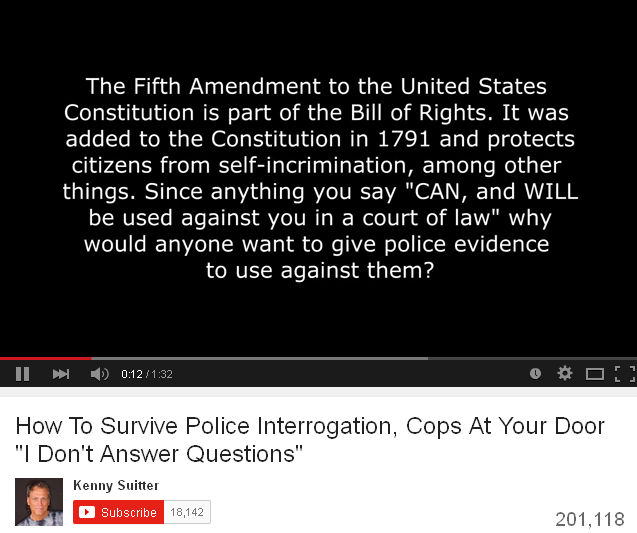
Protects people from being held for committing a crime unless they are properly indicted, that they may not be tried twice for the same crime, and that you need not be forced to testify against yourself. It also contains due process guarantees.

6th Amendment

Guarantees a speedy trial, an impartial jury, and that the accused can confront witnesses against them, and that the accused must be allowed to have a lawyer.

7th Amendment

Guarantees a jury trial in federal civil court cases. This type of case is normally no longer heard in federal court.

8th Amendment

Guarantees that punishments will be fair, and not cruel, and that extraordinarily large fines will not be set.

9th Amendment

Simply a statement that other rights aside from those listed may exist, and just because they are not listed doesn't mean they can be violated.

10th Amendment

Says that any power not granted to the federal government belongs to the states.


Simplified Constitution of the United States

Article 1 – Creates the two parts of Congress.  They are responsible for making laws.

Section 2

Defines the House of Representatives, known as the lower house of Congress.
  • Must be 25 years old, will serve for two years each.  Must be a citizen 7 years.
  • Each state gets Representatives based on state population.
  • Has a leader called the Speaker of the House.

Section 3

Defines the Senate, known as the upper house of the Congress.
  • Must be 30 years old, will serve for six years each.  Must be a citizen 9 years.
  • Each state gets two Senators.
  • Vice-President breaks tie votes.

Section 4

Says that each state may establish its own methods for electing members of the Congress.
Requires, that Congress must meet at least once per year.

Section 5

Says that Congress must have a minimum number of members present in order to meet.
Fines for members who do not show up. It says that members may be expelled.
Each house must keep a journal to record proceedings and votes.
Neither house can adjourn without the permission of the other.

Section 6

Establishes that members of Congress will be paid.
They cannot be detained while traveling to and from Congress.
That they cannot hold any other office in the government while in the Congress.

Section 7

Say how bills become law.
  • All bills must pass both houses of Congress in the exact same form.
  • Bills that pass both houses are sent to the President.
  • He can either sign the bill, in which case it becomes law, or he can veto it.
  • If he vetoes a bill, it is sent back to Congress, and if both houses pass it by a two-thirds majority, the bill becomes law over the President's veto. This is known as overriding a veto.

Section 8

Gives Congress the power to establish and maintain an army and navy, to establish post offices, to create courts, to regulate commerce between the states, to declare war, and to raise money.

Section 9
  • Can not suspend right to remain silent laws.
  • Can not pass laws that make things illegal starting yesterday or last week, etc.
  • No law can give preference to one state over another
  • Can not spend money without permission.

Section 10

States can’t make their own money, or declare war, or tax goods from other states.


Constitution of the United States

Article 2 – Creates the job of President, called the Executive.  Responsible for enforcing the laws.

Section 1

Establishes the office of the President and the Vice-President.
Both serve for four years.
Presidents are elected by the Electoral.
Must be 35 years old.  Must be born in the USA.
Their pay cannot change, up or down, as long as he in is office.

Section 2

President leads the armed forces.
He has a Cabinet to aid him, and can pardon criminals.
He makes treaties with other nations (2/3 of the Senate have to approve of the treaty).
Picks many of the judges and other members of the government.

Section 3

President must give a yearly speech to the nation.
Give suggestions to Congress.
Meet with Ambassadors and other heads of state from other nations.
Ensure the laws of the United States are carried out.

Section 4

A.  Explains how to kick the president from office, called impeachment.

Article 3 – Establishes Judges, called the Judiciary.  They decide if a law is allowable, or if it goes against the Constitution.

Section 1

Establishes the Supreme Court, the highest court in the United States.
Judge serve for life, or until they want to retire.

Section 2

Says what cases the Supreme Court must decide.
It also guarantees trial by jury in criminal court.

Section 3

Defines, without any question, what the crime of treason is.

Article 4 – States Rights.

Section 1

All states will honor the laws of all other states.

Section 2

Citizens of one state are treated equally and fairly like all citizens of another.

It also says that if a person accused of a crime in one state flees to another will be returned to the state that person fled from.

Section 3

How new states come into the Nation.
Control of federal lands.

Section 4

Ensures a “Power by the People” government.
Guarantees that the federal government will protect the states against.

Article 5 – How to change the Constitution.

2/3 of the Representatives must vote on the change.
2/3 of the Senators must vote on the change.
3/4 of the States must vote for the change (34 or 50)

Article 6 – Concerns the United States.

Guarantees that the Constitution and all laws and treaties of the United States to be the supreme law of the country.

Requires all officers of the United States and of the states to swear an oath of allegiance to the United States and the Constitution when taking office.

Article 7 – Explained how the Constitution was agreed to.

Of the original 13 states in the United States, nine had to accept the Constitution before it would officially go into effect.


Amendments passed once the Constitution was adopted

11th Amendment - Enacted on February 7, 1795

Says how someone from one state can sue another state.

12th Amendment - Enacted on June 15, 1804

Redefines how the President and Vice-President are chosen by the Electoral College.

13th Amendment - Enacted on December 6, 1865

Abolished slavery in the entire United States.

14th Amendment - Enacted on July 9, 1868

People had rights on the federal level and on the state level, too.  Dealt with civil war items.

15th Amendment - Enacted on February 3, 1870

Ensured that a person’s race could not be used as criteria for voting.

16th Amendment - Enacted on February 3, 1913

Authorizes the United States to collect income taxes.

17th Amendment - Enacted on April 8, 1913

Shifted the choosing of Senators from the state legislatures to the people of the states.

18th Amendment - Enacted on January 16, 1919

Abolished the sale or manufacture of alcohol in the United States.

19th Amendment - Enacted on August 18, 1920

Ensures that sex could not be used as a criteria for voting.

20th Amendment - Enacted on January 23, 1933

Set new start dates for the terms of the Congress and the President.

21st Amendment - Enacted on December 5, 1933

Repealed the 18th Amendment.

22nd Amendment - Enacted on February 27, 1951

Set a limit on the number of times a President could be elected - two four-year terms.

23rd Amendment - Enacted on March 29, 1961

Grants the Washington D.C. the right to three electors in Presidential elections.

24th Amendment - Enacted on January 23, 1964

Ensured that no tax could be charged to vote for any federal office.

25th Amendment - Enacted on February 10, 1967

Establishes rules for a President who becomes unable to perform his duties while in office.

26th Amendment - Enacted on July 1, 1971

Ensures that any person 18 or over may vote.

27th Amendment - Enacted on May 7, 1992

Any law that increased the pay of legislators may not take effect until after an election.

April 28, 2017

US Supreme Court Justice Sotomayor Refuses to Agree Police Can Do No Wrong: The Explanation of “He Reached for His Waistband” is a Depressingly Well-worn One, Trotted Out All Too Often to Justify Police Shootings

April 26, 2017

(Rewire) - In 2010, Chris Thompson, a Houston police officer, shot Ricardo Salazar-Limon in the back. Salazar-Limon remains partially paralyzed.

Salazar-Limon sued Thompson and the City of Houston, saying that the shooting was excessive force—in other words, that Thompson had no right to shoot him. The case wound its way through the courts for years.

This week, it ended up at the U.S. Supreme Court over one critical question: Can the word of a police officer defending an excessive force claim be considered an “undisputed fact” in a lawsuit, even if that account differs from their accuser?

Like a lot of cases involving police violence, there is considerable dispute between Salazar-Limon and Thompson about what happened that night in 2010.

Both parties agree as to how it all started: Thompson was operating a speed gun that evening, and he recorded Salazar-Limon’s speed as over the limit. He pulled Salazar-Limon over and asked for his license. He checked the license and found no open warrants or charges, but told Salazar-Limon to get out of his truck, as he was being detained on suspicion of driving drunk.

After that, things get muddy. Salazar-Limon and Thompson both say that they struggled, but differ on how much and how long. Thompson contended it went on for quite some time and that Salazar-Limon pushed him toward oncoming traffic. Salazar-Limon, on the other hand, characterized the encounter as brief.

Following the struggle, Salazar-Limon pulled away and started to walk back to his truck. Thompson ordered him to stop. Salazar-Limon said that Thompson then shot him within seconds. Thompson said that Salazar-Limon not only didn’t stop, but he also raised his hands to his waistband, as if he was reaching for a gun. (No gun was ever found.) Only then, according to Thompson, did he shoot Salazar-Limon.

When Salazar-Limon sued over questions of excessive force, the lower court granted summary judgment in favor of Thompson and the City of Houston. The Fifth Circuit upheld that decision. Summary judgment is designed to allow courts to decide cases prior to trial, but it can only be granted when there are no disputes over key facts. A key fact is something integral to the dispute between the parties. In other words, when two parties disagree over the foundational facts of the case, the court can’t grant summary judgment.

Here, the parties disagree over the very essence of the case: Did Thompson shoot Salazar-Limon in the back for no reason, or did he do so because he believed Salazar-Limon was reaching for his waistband and therefore possibly a gun? When this level of disagreement occurs, the court generally has to let the case go to trial so a jury can sort out which party is more credible.

On Monday, the Supreme Court refused to hear Salazar-Limon’s appeal in Salazar-Limon v. City of Houston. In concurring with the denial of certiorari, Justice Samuel Alito essentially said there was no dispute over the key facts because, although Salazar-Limon and Thompson utterly disagree on everything that happened after the very beginning of the traffic stop, Salazar-Limon didn’t utter the magic words “I didn’t reach for my waistband” in his depositions and affidavits—and therefore no disagreement exists.

It’s a controversial and pedantic way of thinking about the law, but one at least some conservative Supreme Court justices have endorsed. In doing so, they’re essentially saying that cops are inherently believable, while people that are shot by cops are not.

And Justice Sonia Sotomayor is having none of it. She believed the Supreme Court should have taken the case: In her dissent from the denial of certiorari, she raged, and rightly so, about this state of affairs.

She dryly noted that the explanation of “he reached for his waistband” is a depressingly well-worn one, trotted out all too often to justify police shootings of this sort. She saves her real ire, however, for discussing how this decision flies in the face of how the American legal system is supposed to work:
This is not a difficult case. When a police officer claims that the victim of the use of force took some act that would have justified that force, and the victim claims he did not, summary judgment is improper.
What Sotomayor is getting at is incredibly crucial: Officers are no more or less inherently believable than anyone else at this stage in a lawsuit. A determination of credibility must go to a jury for them to sort out who is telling the truth. To decide at this point that a police officer’s word is better than that of the shooting victim—even though the victim’s testimony is also made under oath—is to say that the police essentially never lie (and that, of course, victims of police shootings do).

November 22, 2015

Citizens Can Record Police on the Street or in a Public Place

Charges dropped against student arrested while taping police

November 20, 2015

AP - Criminal charges were dropped Friday against a suburban New York college student arrested while taking a video of two friends being arrested.

Charges of resisting arrest, obstruction and drug possession were dismissed against Thomas Demint, a 21-year-old Long Island college student, defense attorney Kenneth Mollins told The Associated Press. A spokesman for the Suffolk County district attorney confirmed the case was dropped during a court proceeding Friday morning "in the interest of justice," but declined to comment further.

Police arrested Demint in May 2014 after he recorded video depicting officers slamming the mother of his two friends to the ground because they said she tried to interfere in one of her sons' arrest. Earlier in the video, the woman is hit by a stun gun.
"My client is ecstatic that justice was done after 18 months," said Mollins, who scheduled a Monday press conference to discuss plans to file a $2 million lawsuit against county officials, claiming false arrest.
A county spokeswoman declined to comment, saying officials do not discuss pending litigation.
"He felt he was put in a position where people automatically thought he did something wrong," Mollins said of Demint.
Civil liberties experts say Demint's arrest is part of a growing trend of citizen videographers getting arrested after trying to record police behavior.

Demint came forward last summer to discuss his arrest; he said he had previously been afraid to speak publicly about the case fearing retribution from police.
"I didn't do anything wrong. I was just there to videotape," Demint told reporters.
A criminal complaint alleged Demint was "hostile, combative and using profanity toward the arresting officer and intentionally attempted to prevent a lawful arrest by walking away and refused to comply with verbal commands as the officer attempted to put handcuffs on him."

The eight-minute video does not depict officers arresting Demint, who said he had stopped recording moments before he was tackled by three officers. He claims the officers attempted to erase the video from his phone but mistakenly erased another video.

June 7, 2015

Overzealous Cop Screams Profanities, Uses Excessive Force, Pulls Out and Points Gun, and Unlawfully Handcuffs Black Children at 14-Year-Old's Pool Party in McKinney, Texas

UPDATE JUNE 9, 2015: The National Bar Association, a network of predominantly African-American attorneys, judges and law professors, called for Officer David Eric Casebolt's immediate firing. "It is insufficient to place him on paid administrative leave, when it is obviously clear that this officer was not enforcing the law, but instead was enforcing his will and power and showing explicit bias towards these African-American teenagers," the Washington, D.C.-based group said. "The girl is obviously in distress and not in any manner moving or attempting to get away from the officer. She posed no physical threat to the officer."
UPDATE JUNE 9, 2015: Casebolt has resigned. Officer David Eric Casebolt's actions were "indefensible," though he was not pressured to quit, McKinney Police Chief Greg Conley said at a press conference after the officer submitted his resignation Tuesday, June 10th. Benét Embry, a black local radio personality who witnessed the Friday incident, said neighbors told him that a woman who lives in the community reserved the pool for a party. The homeowners' association limits the number of guests each homeowner may have at the pool to two. But about 130 people, mostly kids, showed up. At one point, several kids began jumping over the fence to get into the pool area and were causing a disturbance, Embry said, and a couple of fights broke out. "This was a teenage party that got out of hand," Embry said. Police said some of the young people did not live in the area and did not have permission to be at the pool.

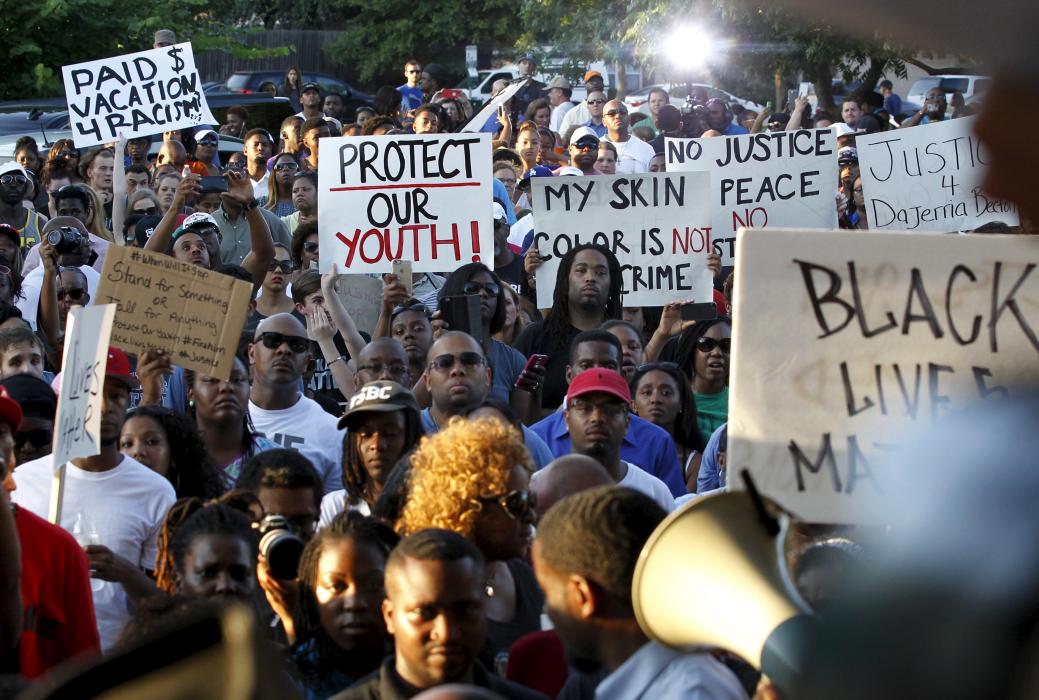
Protesters listen during a rally against what demonstrators call police brutality in McKinney, TexasProtesters listen during a rally against what demonstrators call police brutality in McKinney, Texas, June 8, 2015. Hundreds marched through the Dallas-area city of McKinney on Monday calling for the firing of police officer Eric Casebolt, seen in a video throwing a bikini-clad teenage girl to the ground and pointing his pistol at other youths at a pool party disturbance. (REUTERS/Mike Stone)

McKinney, Texas, police officer who pulled gun on unarmed teenagers at pool party placed on leave


Video of incident stirs outrage, prompts charges of racial bias 

Warning: The video above contains obscene language. Viewer discretion is advised.

June 7, 2015

Yahoo! News - A Texas police officer who drew his gun on unarmed teenagers while responding to a disturbance at a pool party and threw a 14-year-old girl in a bathing suit to the ground has been placed on administrative leave, officials said Sunday.

The incident occurred Friday night in McKinney, Texas, about 30 miles north of Dallas, when police were called to a private community pool where a large crowd had gathered.

In a video taken by a teenage bystander and posted to YouTube, the officer, who is white, can be seen shouting obscenities and ordering some black teens to lie on the ground while telling others to disperse. The officer is then seen grabbing the back of the girl's head, throwing her to the ground and pushing her face down, then pulling his gun on a pair of black teenagers who appeared to be coming to her aid..

(YouTube/Brandon Brooks)

"This video has raised concerns that are being investigated," the McKinney Police Department said in a statement.

April 11, 2015

Do You Have to Show an ID to a Cop? How Do You Refuse a Search on Your Car?


May 21, 2009

Dr. Tarrin P Lupo - Do you have to show an ID to a cop? How do you refuse a search on your car? Here's and interview with civil rights attorney Alan Lowe to get answers.


The Fourth Amendment: Protecting Your Privacy

Nolo - The Fourth Amendment to the U.S. Constitution places limits on the power of the police to make arrests, search people and their property, and seize objects and contraband (such as illegal drugs or weapons). These limits are the bedrock of search-and-seizure law. This article covers basic issues you should know, beginning with an overview of the Fourth Amendment itself. (You can find it and other amendments in the Bill of Rights in Nolo's list of The Most Important Cases, Speeches, Laws & Documents in American History.)

March 25, 2015

Jeff Costlow Detained at the White House for Photography


Also view videos at Kenny Suitter's youtube channel.


What to Do When You Are Pulled Over


It doesn't always have to be a harrowing experience, even if you know that you were driving well over the speed limit, or that your registration is expired, or heaven forbid, you've had a few too many cocktails and are behind the wheel anyway.

There are a few simple rules to follow to make sure the experience doesn't have to be any more unpleasant than it already is -- considering that it's likely you will come away with a fat ticket.

We sought the advice of a former Virginia State Trooper, now retired and working happily at an intelligence analyst job for a federal agency in Washington, D.C. He asked that we not use his real name, "because I don't want people to think I'm trying to draw attention to myself," he said. He chose a colorful alias, asking that we just refer to him as Trooper Tom. Here are his six tips.

March 16, 2015

Know Your Rights and What to Do If You Are Detained by the Police


Also view videos at Kenny Suitter's youtube channel.


'Search and Seizure' and the Fourth Amendment

Don't look directly at a police officer while you're driving because they consider that a sign of guilt or act of aggression. Keep in mind that when you are stopped or detained or interrogated that it is legal for a cop to lie to you, which means lying by cops is sanctioned by the justice system and, therefore, all cops are liars.

FindLaw - The Fourth Amendment to the U.S. Constitution protects personal privacy and every citizen's right to be free from unreasonable government intrusion into their persons, homes, businesses and property -- whether through police stops of citizens on the street, arrests or searches of homes and businesses.