Showing posts with label World War III Scenarios. Show all posts

October 14, 2017

How a Nuclear War with North Korea Could Start: Try to Kill Kim Jong-un

October 12, 2017

(The National Interest) - Commentators in Washington—and even sometimes officials in the Pentagon—offer suggestions that among the military options available to Washington in dealing with North Korea is some sort of decapitation strike. However, this is easier said than done—and might not in fact be a viable option. It would also almost certainly start a war on the Korean peninsula.

The first challenge is to locate the elusive North Korean leader Kim Jong-un. Finding Kim is easier said than done inside the secretive North Korean state. Layers of defenses protect the young North Korean dictator inside an already tightly controlled country where the security apparatus has the population on lockdown. Moreover, Kim is thought to use doubles of himself to act as decoys—further compounding the problem.

Technical intelligence gathering means such as spy satellites and signals intelligence can collect information about North Korea, but locating and identifying an individual requires a level of precision that those assets can’t provide. For example, analysts watching footage from drones flying over Syria and Iraq have difficulty identifying friend from foe—ISIS from the Kurdish Peshmerga—without help from ground forces. And, of course, the Kim regime is not Iraq or Syria—drones like the U.S. Air Force RQ-4 Global Hawk or the MQ-9 Reaper would not survive long inside North Korean airspace. Only a stealthy drone like the RQ-170 Sentinel would have any chance of survival.

The real trick would be to get human intelligence assets on the ground inside North Korea. But human intelligence assets inside North Korea are almost non-existent. The typical embassy-based asset recruiting that a Western intelligence agency might conduct inside another country is simply not possible in Pyongyang given the extremely tight North Korea security. Moreover, infiltrating into North Korea covertly is also difficult because the Kim regime uses a system of neighborhood watches similar to the Imperial Japanese Tonarigumi, which would spot anyone who does not belong immediately. That severely impairs human intelligence gathering or infiltrating special operations forces into North Korea.

If the North Korean leader is by some chance found, the next challenge is to eliminate him. However, targets such as Kim are fleeting, and the United States would have to be ready to move immediately. For example, if Kim were found to be reviewing the test launch of an intercontinental ballistic missile, a combat aircraft would have to be orbiting outside North Korean airspace waiting for the order to strike (which is why the North Korean regime takes umbrage at U.S. Air Force B-1B bomber flights north of the 38th parallel). That aircraft would likely have to be stealthy to maintain the element of surprise—and it would probably have to be fast in order to exploit what is likely to be a very short window of opportunity.

October 11, 2017

North Korea Might Have One Weapon That America Won't Be Able to Stop

October 10, 2017

(The National Interest) - Biological weapons combined with chemical and nuclear weapons attached to long-range missiles would give Kim Jong-un the devastating military tools needed to kill millions of people—and hit the U.S. homeland. Food for thought every time the world’s attention turns to the Korean peninsula.

While the world might be worried about all things North Korea—especially its growing nuclear weapons arsenal—Pyongyang very likely has other nasty weapons of mass destruction that, given the right conditions, could be just as lethal.

What most refer to as biological weapons—stuff right out central casting that always make those ‘end of the world’ movies all so good—might just be North Korea’s real weapon of war to fear.

While they certainly don’t get as much attention as atomic bombs or chemical weapons such as Sarin, biological weapons can kill hundreds of thousands of people, and maybe even millions if deployed over a wide enough area. While exact facts and figures aren’t perfect, there is strong evidence to suggest Pyongyang could possess anthrax weapons as well as possibly cholera, plague and even smallpox. And now that North Korea’s missile arsenal is becoming ever more sophisticated by the day . . . well, you get the idea.

But developing such deadly agents in a controlled lab and deploying them in a war are totally different ball games. To give one a guide on how this could work, a recent report by the RAND corporation lays out the frightening details. And as you will see very quickly, it would not take much to kill thousands and spread mass panic:

“The Republic of Korea Ministry of Defense asserts that “[t]he North may also dare to launch a secret attack in the rear through its SOF [special operations forces] troops armed with biological weapons.” Even a kilogram of many types of biological weapons could disrupt most military targets if delivered properly, and this quantity could easily be delivered by special operations forces. Missiles and aircraft could also deliver this quantity of biological weapons.

“Indeed, North Korea special forces are a likely means for delivering North Korean biological weapons. North Korea has some 200,000 special forces, a small fraction of which could deliver devastating biological attacks against South Korea, Japan, and even the United States. North Korea could use biological agents in isolation, perhaps as an escalated provocation in which it seeks to infect a limited number of people, or it could use biological agents as the leading edge of an invasion of the ROK, hoping for thousands or even more infections to weaken the ROK’s defenses and will to fight. Biological weapon use in the latter context is particularly worrisome.”

From there, things could go from bad to worse:

August 12, 2017

Pentagon’s World War III Scenario

Sanctions against China, Russia, Iran and North Korea. Part of a Global Military Agenda. 

July 29, 2017

(Global Research) - Washington announced sweeping sanctions to be imposed on three countries: Russia, Iran and North Korea, following the US House of Representatives vote to impose a three countries’ sanctions “package”. 

While the justifications are diverse and unrelated, all three countries are from a military and geopolitical standpoint on the US nuclear “hit list”. They are considered as de facto rogue states, enemies of America.

The Congressional bill invoked respectively Tehran’s support of terrorism, Russia’s meddling in the 2016 presidential elections, and North Korea’s ICBM missile tests.

The pretexts with regard to Russia and Iran are largely fabricated. The main sponsor of Islamic terrorism is US intelligence.

The “package sanctions regime” is intimately related to the Deep State military agenda. Moreover it is worth noting that the legislation included a (rather dangerous) clause to “disapprove of any moves the president makes to end the sanctions… and build a better relationship with Russian President Vladimir Putin.”

This clause is visibly intended by the neocon hawks in Washington to constrain the powers of the White House. In the words of Paul Craig Roberts, they intend to “Put Trump in a box.”

The Congressional bill still requires the endorsement of President Trump, who might exercise his veto.

The China Sanctions Regime

While China was excluded from the Congressional three countries’ “package”, Washington formally intimated in early July that sanctions would also be imposed on China in response to China’s increased bilateral commodity trade with North Korea.

China is described as an ally of North Korea. While the US sanctions regime is not officially directed against the Chinese government, selected Chinese banks and trading companies involved in the financing of China-DPRK commodity trade are potential targets of US reprisals.

Having lost patience with China, the Trump administration is studying new steps to starve North Korea of cash for its nuclear program, including an option that would infuriate Beijing: sanctions on Chinese companies that help keep the North’s economy afloat.

The insinuation is crystal clear: curtail your trade with North Korea, or else…

Washington has visibly opted for a coordinated package of sanctions which is intimately related to its global military agenda. Is this sanctions regime a preamble to military action?

November 22, 2015

It Has Been 70 Years Since the Last World War

How World War III Starts: 5 'Sparks' That Could Set the World Ablaze

November 21, 2015

National Interest - Since 1756, the modern-state system has experienced four global wars:
  1. The Seven Years War
  2. The French Revolutionary Wars 
  3. World War I
  4. World War II
The longest global peace came between 1815 and 1914, and it has now been 70 years since the last world war.

Every global war needs a spark.  A conflict somewhere ignites the interest of more than one great power. World War I had the assassination of Franz Ferdinand; the Seven Years War had desultory fighting between the French and British along the Mississippi River.

The combatants do not always appreciate that the sparks can lead to conflagrations.

But at some point things escalate.  Other major nations become involved, and the initial cause of war becomes subsumed under great power competition. 

The goal of fighting becomes the establishment of a new global order; and with the increase in stakes comes an increase in the resources committed by the combatants and the sacrifices that their people make.

“World War III” would, in effect, be the fifth World War in the history of the modern state system.
What might spark such a war, and how would it escalate into a global conflict?

Here are five potential scenarios, none likely, but all possible:

July 25, 2015

Iranian Supreme Leader: "We Welcome No War, Nor Do We Initiate Any War, But If Any War Happens, the One Who Will Emerge Loser Will Be the Aggressive and Criminal U.S."

Iranian leader tweets graphic of Obama with gun to head

July 25, 2015

USA TODAY - Iran's supreme leader tweeted a graphic Saturday that appears to depict President Obama holding a gun to his head as Britain relaxed its travel advice to the nation, citing decreased hostility under the Iranian government.

"US president has said he could knock out Iran’s military. We welcome no war, nor do we initiate any war, but.." reads the caption above the tweet sent by Ayatollah Ali Khamenei on @khamenei_ir, his English language account.

March 1, 2015

N. Korea Fires Missiles in Anger as South-U.S. Drills Begin

N. Korea fires missiles in anger as South-US drills begin

March 1, 2015

AFP - North Korea fired missiles into the sea Monday and vowed "merciless strikes" against the US and South Korea, as the allies kicked off eight weeks of joint military drills denounced by Pyongyang.

The annual exercises always trigger a surge in military tensions and warlike rhetoric on the divided peninsula, and analysts saw the North's missile tests as a prelude to a concerted campaign of sabre rattling.

The launches came with a stern warning from the nuclear-armed North Korean People's Army (KPA) that this year's drills would bring the peninsula "towards the brink of war."

February 4, 2015

North Korea Warns U.S. of 'Disastrous Final Doom" and Says the 'Time of the Nightmare" is Near

North Korea Warns US of 'Disastrous Final Doom'

February 4, 2015

Good Morning America - North Korea's National Defense Commission took to the airwaves today to threaten the United States with the "most disastrous final doom on its mainland," warning that "the time of the nightmare" is near.

The United States has "gone mad," a North Korean State Television newsreader said, boasting of North Korea’s superior cyber and nuclear warfare and adding that North Korea "has neither the need nor the willingness to sit at the negotiating table with the U.S. any longer."

November 17, 2014

World War 3 Scenario? Russia and US Isolation Could Lead to ‘Nuclear Catastrophe,’ Expert Says

Kremlin Preparing 'Nuclear Surprise' for NATO, Russian State Paper Says


Epoch Times - An editorial from Stanford University professor Siegfried S. Hecker in a recent NY Times editorial wrote that a “nuclear catastrophe” could take place if the US and Russia continue to be at odds with one another.  His editorial comes about a week after author Noam Chomsky claimed that US-Russia tensions could spark a nuclear war. He wrote:
“My Russian colleagues and I believe that in nuclear matters, collaboration is essential, whereas isolation can lead to catastrophes. It is important for both Moscow and Washington to heed this message.”
Hecker, who was the director of the Los Alamos National Laboratory from 1986 to 1997, said that over the past decade, Russian-US efforts to reduce the threat of nuclear weapons were initiated following the collapse of the Soviet Union.

He noted that “cooperative threat reduction was highly successful” and “nothing really terrible happened in the Russian nuclear complex since the Soviet collapse”

President Vladimir Putin, he noted, recently said the Russian nuclear defense complex “has risen from the ashes like the proverbial Phoenix.”
“Moscow views cooperative threat reduction programs as a reminder of the humiliating 1990s,” Hecker then says of the new developments.
Earlier in November, author Noam Chomsky claimed escalating tensions between the US and Russia could spark a nuclear world war.
 “The worst-case scenario, of course, would be a nuclear war, which would be terrible. Both states that initiate it will be wiped out by the consequences. That’s the worst-case,” he said, via state run RT.com. “And it’s come ominously close several times in the past, dramatically close. And it could happen again, but not planned, but just by the accidental interactions that take place – that has almost happened,” he added.
At the same time, an article from state-backed Pravda–a formerly Soviet Union-run newspaper–essentially published a propaganda piece about Russia’s nuclear weapons. The Kremlin is preparing a “nuclear surprise” for NATO amid disputes between the West and the Kremlin over the Ukraine conflict, the paper said a few days ago in an editorial.

The report highlights a US State Department report that the US and Russia are about equal in terms of nuclear weapons and nuclear warheads.

The publication adds that the US agreed to reduce the amount of nuclear weapons it possesses, while “Russia won an opportunity to increase” its nuclear arsenal.
“Here is another surprise. As for tactical nuclear weapons, the superiority of modern-day Russia over NATO is even stronger,” it adds. “The Americans are well aware of this. They were convinced before that Russia would never rise again. Now it’s too late,” the report concludes.
German Chancellor Angela Merkel on Monday spoke about Russia’s alleged Cold War-style operations in other countries.
“This is not just about Ukraine,” Merkel said, according to the Wall Street Journal. “This is about Moldova, this is about Georgia, and if this continues then one will have to ask about Serbia and one will have to ask about the countries of the Western Balkans.”
Merkel described the conflicts with Putin and Russia as a test for the European Union.
“Old thinking in terms of spheres of influence, in which international law is trampled upon, cannot be allowed to assert itself,” Merkel said. “I am confident it will not assert itself, though the road may be long, difficult, and come with many setbacks.”
The reports come as Russia announced that it is planning to send long-range bombers to the Gulf of Mexico in what appears to be a display of military power.
“We do not see the security environment as warranting such provocative and potentially destabilizing activity,” a senior Obama administration source told CNN last week.
Meanwhile, U.S. State Department spokeswoman Jen Psaki added:
“We don’t think there is a current situation in the western Atlantic and eastern Pacific or the Caribbean and the Gulf of Mexico that warrants additional flights in out-of-area territory.”

October 24, 2014

Putin Says Russia Will Not Comply with U.S. Attempts to Enforce Its Will on Other Countries and Says That the World is Becoming an Increasingly Dangerous Place Because of America's Desire for Eternal Domination

Putin accuses US of undermining global stability

October 24, 2014

AP - President Vladimir Putin of Russia said Friday that the world is becoming an increasingly dangerous place because of U.S. attempts to enforce its will on other countries and that his nation will not comply.

In an emotional speech before international political experts, Putin unleashed scathing criticism of the United States for what he called its disregard of international law and unilateral use of force.

If the United State fails to abandon its "desire of eternal domination," then "hopes for peaceful and stable development will be illusory, and today's upheavals will herald the collapse of global world order," Putin said during a meeting that lasted about three hours in the Black Sea resort of Sochi.

His voice strained with anger, Putin accused the U.S. and its allies of trying to "tailor the world exclusively to their needs" since the end of the Cold War, using economic pressure and military force and often supporting extremist groups to achieve their goals.

He cited the wars in Iraq, Libya and Syria as examples of flawed moves that have led to chaos and left Washington and its allies "fighting against the results of their own policy."
"They are throwing their might to remove the risks they have created themselves, and they are paying an ever increasing price," Putin said.

"Unilateral diktat and attempts to enforce their own cliche on others bring opposite result: escalation of conflicts instead of their settlement, widening area of chaos in place of stable sovereign states, support for dubious elements from open neo-Nazis to Islamic radicals instead of democracy."
He said that Russia has been cold-shouldered by the West, despite its eagerness to cooperate.

The U.S. and the European Union imposed tough sanctions on Russia after it annexed the Black Sea peninsula of Crimea populated mostly by Russian speakers, and allegedly armed rebels fighting for independence in eastern Ukraine.

Putin also has maintained support for President Bashar Assad of Syria in a civil war that has helped destabilize the Middle East. The U.S. has demanded that the Syrian leader step down.

In Washington, U.S. State Department spokeswoman Jen Psaki reacted to Putin's speech by saying the U.S. "does not seek confrontation with Russia, but we cannot and will not compromise on the principles on which security in Europe and North America rest."
She said there may be disagreements, "but we remain committed to upholding Ukraine's sovereignty and territorial integrity."

Psaki also told reporters that the U.S. has been able to work with Russia on a range of issues and hopes to engage with Moscow again on areas of mutual concern.
In Ukraine, Putin said, the West has ignored Russia's legitimate interests in its neighbor and supported the ouster of Ukraine's former Russian-leaning president.He accused the West of breaking its promises, citing a February phone conversation with President Barack Obama just hours before protesters in Kiev drove Ukrainian President Viktor Yanukovych out of office.

Putin denied allegations that Russia wants to split Ukraine, but he said the rebel regions should be allowed to hold local elections as they plan on Nov. 2, not in December as the Ukrainian government wants.He said the withdrawal of forces under the cease-fire deal should create conditions for gradually rebuilding ties between the central authorities and the rebel regions.

The Russian leader is well known for having said that the breakup of the Soviet Union was "the greatest geopolitical catastrophe" of the 20th century.But Putin denied allegations that Russia wants to rebuild the Soviet empire.

Evoking the archetypal image of the Russian bear, Putin warned that his nation will firmly stand its ground to defend its vital interests.
"The bear is the master of the taiga (a subarctic forest). It's not going to move to other climate zones," he said. "But it's not going to give up its taiga to anyone."
"Russia is not demanding some special, exclusive place in the world," he said. "While respecting interests of others, we simply want our interests to be taken into account, too, and our position to be respected."

September 22, 2014

U.S. Launches Airstrikes on Syria

"The strategy for the Iraq war is now making itself known. By using 9/11 as a pretext to invade Afghanistan, Iran is flanked on the east side. By using the Desert Storm protocols and UN Resolution 1441, among others, the excuse to invade and occupy Iraq is brought forward because Saddam is not disarming, we are told. By taking Iraq, the U.S. forces then flank Iran to the West. Having troops stationed in Turkey is a key part of this plan, for then Iran is flanked to the North, which is why so much pressure is being applied to Turkey to allow our troops there. Although we cannot be sure which incidents will be used to bring war with Iran, we can be sure something will transpire to make is necessary to invade Iran, and most likely Syria would be next. Syria is also isolated in all directions. With Israel the main benefactor in the Middle East, this strategy will totally rearrange the Middle Eastern landscape and set the stage for the appointment of the 10 puppet kings of Revelation chapter 17, which have no 'kingdom yet' but will with the beast for 42 months... If we are reading the book of Habakkuk correctly, not only do we win the Iraq war, it is over rapidly and with few casualties on our side; however, there may be massive casualties of Iraqi civilians and military. We then use this stronghold to further buildup our Middle East military might for the strikes on Iran and Syria, and then eventually every Arab state in the region. This may take some time, and it is difficult to assess that part of it, because Habakkuk does not tell us how long this conquest of the Middle East is. We only know that it happens, and that it sets the stage for the demise of the United States and the rise of the "antichrist" powers in America. It is this war that sets the stage for the removal of Babylon-America by nuclear strike at a later time." - Steward C. Best, March 2003, The Strategy for Taking the Middle East

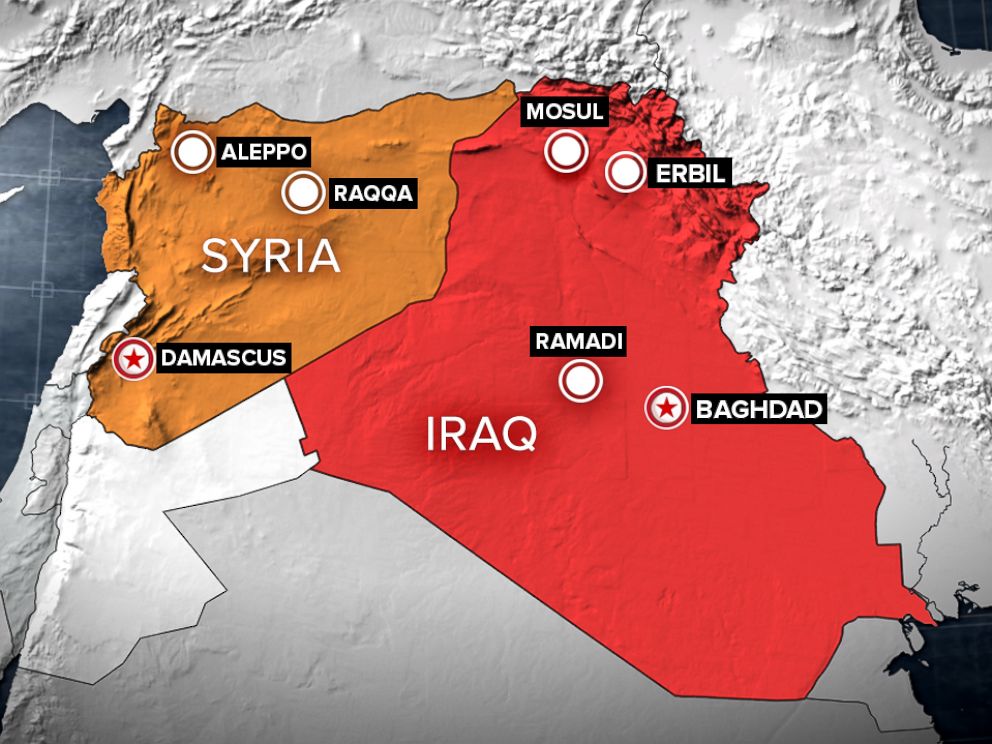
Middle East Map 

US Airstrikes Against ISIS Targets Under Way in Syria

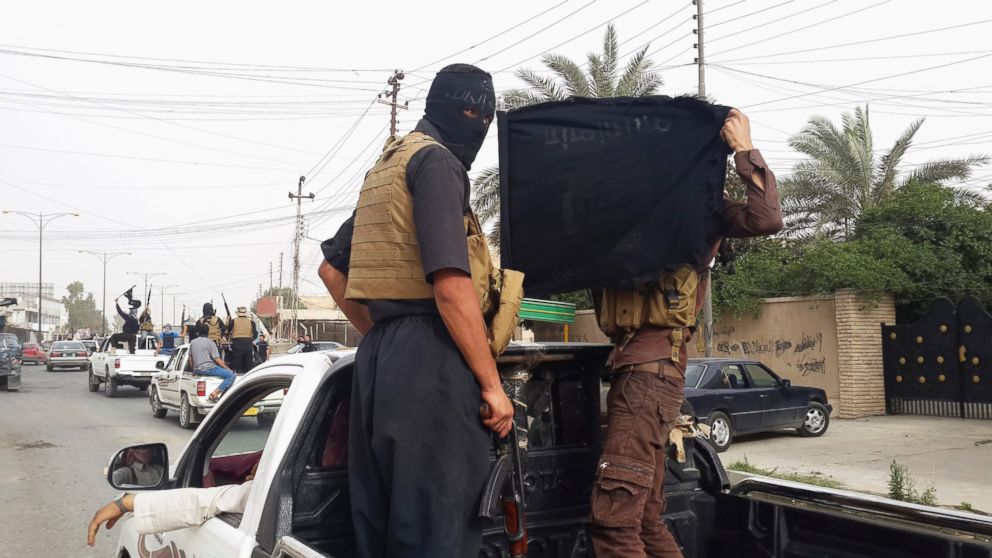
PHOTO: Fighters of the Islamic State of Iraq and the Levant (ISIL) celebrate on vehicles taken from Iraqi security forces, at a street in city of Mosul, June 12, 2014.

July 17, 2014

U.N. Security Council Condemns North Korea Missile Launches

U.N. Security Council condemns North Korea missile launches

July 17, 2014

Reuters - The U.N. Security Council on Thursday condemned recent ballistic missile launches by North Korea, describing the three rounds of Scud short-range missiles fired in June and July as a violation of council demands on Pyongyang.
"The members of the Security Council condemned these launches ... and urged the DPRK (North Korea) to fully comply with the relevant Security Council resolutions," said Rwandan U.N. Ambassador Eugene Gasana, council president for July.
North Korea is under an array of United Nations, U.S. and other national sanctions for repeated nuclear and ballistic missile tests since 2006 in defiance of international demands to stop.

U.N. Secretary-General Ban Ki-moon deplored the continued missile launches by North Korea. "The Secretary-General urges the DPRK instead to work towards building confidence and mutual trust with its neighbors," Ban's press office said in a statement.

Related:

Israel Launches Ground Offensive in Gaza Strip

Israeli PM orders ground offensive in Gaza: official statement

July 17, 2014

Reuters - Israeli Prime Minister Benjamin Netanyahu on Thursday instructed the military to begin a ground offensive in Gaza, an official statement from his office said.

Reuters witnesses and Gaza residents reported heavy artillery and naval shelling and helicopter fire along the Gaza border.
"The prime minister and defence minister have instructed the IDF to begin a ground operation tonight in order to hit the terror tunnels from Gaza into Israel," the statement said.
Israel and Palestinian militants in the densely populated enclave have been fighting a cross border war for the ten days.

The Israeli military says Gaza militants have fired more than 1,300 rockets into Israel, and Palestinian health officials say 233 Palestinians have been killed in Israeli air and naval strikes. One Israeli civilian has been killed by fire from Gaza.

A statement from the Israeli military said the operation will include "infantry, armoured corps, engineer corps, artillery and intelligence combined with aerial and naval support."

Before dawn on Thursday, about a dozen Palestinian fighters tunnelled under the border, emerging near an Israeli community. At least one was killed when Israeli aircraft bombed the group, the military said.

UN Calls for Reinstitution of the November 2012 Israeli-Palestinian Cease-fire Centered on the Gaza Strip

July 12, 2014

AP - The U.N. Security Council called Saturday for a cease-fire in the Israeli-Palestinian conflict centered on the Gaza Strip.

A council statement approved by all 15 members calls for de-escalation of the violence, restoration of calm, and a resumption of direct negotiations between Israelis and Palestinians aimed at achieving a comprehensive peace agreement based on a two-state solution.

The statement calls for "the reinstitution of the November 2012 cease-fire," which was brokered by Egypt, but gives no time frame for when it should take effect.

Palestinian U.N. envoy, Riyad Mansour stressed, however, that the Palestinians' understanding is that the cease-fire should go into effect immediately.
"We will observe very closely whether Israel will abide by this call and we hope they do," Mansour told reporters. "If they don't, we have a lot in our arsenal, and we will not allow the Security Council to rest for a minute. It is its job to maintain international peace and security, and it is its job to stop this aggression against our people."
In a sign of increasing international pressure to end the conflict, British Foreign Secretary William Hague also called for a cease-fire Saturday and said he would meet with U.S. Secretary of State John Kerry and the foreign ministers of Germany and France in Vienna on Sunday to discuss a halt to the fighting. Mansour said Arab foreign ministers will also meet Monday "to continue the effort to stop the aggression against our people."

The press statement, which is not legally binding but reflects international opinion, is the first response by the U.N.'s most powerful body, which has been deeply divided on the Israeli-Palestinian conflict.

The United States, Israel's most important ally, has defended the Israeli attacks in response to the barrage of rockets fired into Israel from Gaza, which is controlled by the militant group Hamas. But other council members have decried the escalating Israeli attacks which Mansour said have killed or injured more than 1,000 Palestinians. There have been no fatalities in Israel from the continued rocket fire.

A U.S. official, speaking on condition of anonymity because he was not authorized to speak publicly, reiterated American support for Israel's right to defend itself against Hamas attacks.
"That said, we remain concerned about the risk of further escalation and reiterate the need for all sides to do everything they can to protect the lives of civilians and restore calm," the official said. "The United States remains ready to help facilitate a cease fire and hope an end to the current violence can be quickly brought about."
The council statement does not directly mention either the Hamas rocketing or the Israeli response.
Instead, it expresses "serious concern regarding the crisis related to Gaza and the protection and welfare of civilians on both sides" and calls for "respect for international humanitarian law, including the protection of civilians."

Mansour said the Arab and Islamic world and the Palestinians' international supporters were "outraged" that the Security Council dragged its feet in responding to the Israeli offensive, which began Tuesday.

He said a proposed Security Council resolution, drafted by the Palestinians and their supporters, "contributed to pressuring the Security Council to adopt this statement."

If the Israelis do not respond immediately to the cease-fire call, Mansour said one option is to go back to the council to pursue approval of the draft resolution, which if adopted would be legally binding.

The initial draft, obtained by The Associated Press, would condemn all violence against civilians in the Israeli-Palestinian conflict and call for "an immediate, durable and fully respected cease-fire."

It expresses "grave concern" at the escalating violence and deteriorating situation in the Palestinian territories due to Israeli military operations, particularly against Gaza,, and at the heavy civilian casualties including among children. But it makes no mention of the rockets fired into Israel from Gaza, which would likely make it unacceptable to the United States, which as a permanent council member has veto power.

July 9, 2014

U.S. Abandons Baghdad, Iran and Russia Move In

Bible prophecy describes the battle of Armageddon as a coalition of nations that will almost certainly include China and Russia and several Muslim nations of the Middle East. Every day, the evidence mounts that China will be tightly leagued with Russia and many of the Islamic nations in a powerful anti-Israel political and military alliance from which the 200-million-man army described in the book of Revelation (Rev. 9:16) will ultimately come. - The Sixth Trumpet War of Revelation 9

The Chinese are buying physical assets – and not just representations of those assets in the form of paper receipts – but the actual physical commodities. And they are storing them in-country. Perhaps they’ve determined that U.S. and European debt are a losing proposition and it’s only a matter of time before the financial, economic and monetary systems of the West undergo a complete collapse. At best, what these signs indicate is that the People’s Republic of China is expecting the value of currencies (they have trillions in Western currency reserves) will deteriorate with respect to physical commodities. They are stocking up ahead of the carnage and buying what they can before their savings are hyper-inflated away. At worst, they may very well be getting ready for what geopolitical analyst Joel Skousen warned of in his documentary, Strategic Relocation, where he argued that some time in the next decade the Chinese and Russians may team up against the United States in a thermo-nuclear showdown. - Chinese Government and Large Chinese Corporations Have Been Systematically Buying Up U.S. Businesses, Homes, Farmland, Real Estate, Infrastructure and Natural Resources

How Putin outmaneuvered the US in resupplying the Iraqi military

July 9, 2014

Yahoo News - Little noticed among the disturbing tableau of images coming out of Iraq in recent weeks is a changing of the guard evident at the Baghdad International Airport (BIAP). As the crisis has deepened, U.S. contractors, U.S. Embassy personnel and most of the U.S. service members from the embassy’s Office of Security Cooperation have abandoned the threatened capital. The exodus has coincided with Russian contractors and support personnel pouring into BIAP to help launch the 25 Russian SU-25 warplanes that Moscow is rushing to Iraq in its hour of need.

Thus in June U.S. contractors employed by Bell Helicopter, Beechcraft and General Dynamics Land Systems have all pulled their support personnel out of Iraq, depriving Iraqis of maintenance and repair for their U.S.-manufactured Bell ARH-407 armed reconnaissance helicopters, Beechcraft T-6 military trainer aircraft and M-1 tanks. Given the deteriorating security situation, a knowledgeable source says that virtually all U.S. contractor personnel have left Iraq.
“When the crisis worsened U.S. corporate leadership made a decision to pull all their guys out of Iraq, and the U.S. government took a hands-off approach that left those decisions up to each company,” said the U.S. source in Baghdad. “We’re discovering that U.S. companies in this crisis don’t have a high tolerance for risk. Unfortunately, the Russians are much more tolerant of risk.”
Making matters worse, that Iraqi arsenal notably does not yet include a single one of the 34 F-16 fighters that Iraq has had on order since 2010; nor the 24 Apache helicopter gunships on order that were held up by Congress until last January and still have not flown; nor the 24 Beechcraft AT-6 Texan II armed turboprop planes that the State Department approved for sale to Iraq back in May.

The retreat of U.S. contractor and embassy personnel, and failure to follow through in a timely fashion on U.S. promises of military equipment for Iraq, is feeding a widespread narrative of declining American influence and commitment to the Middle East. The perceived power vacuum as the U.S. military presence wanes has been noted by adversaries and allies alike.

The perception of a U.S. retreat from the region was reinforced by the Obama administration’s failure to follow through on promised military strikes against Bashar Assad’s regime in Syria after it used chemical weapons last year, emboldening Assad’s security forces and badly demoralizing the more moderate Syrian rebel factions. Those secular Syrian rebel groups last week threatened to lay down their weapons altogether if more military equipment and support was not forthcoming.

Against U.S. wishes, Massoud Barzani, the president of the autonomous Kurdish region in northern Iraq, declared that he will soon hold a referendum on Kurdish independence, reportedly with a green light from NATO ally Turkey. Saudi Arabia has repeatedly distanced itself from Washington in disagreements over U.S. nuclear talks with Iran, inaction in Syria and opposition to the military coup in Egypt. Critics say a pattern is developing of once staunch allies going their own way out of frustration with U.S. inaction.

Meanwhile, U.S. tentativeness before and during the Iraq crisis is in marked contrast to the approach of Russia and Iran, which rapidly sent military advisers and support personnel to bolster the regime of Iraqi Prime Minister Nouri al-Maliki.

The first of the SU-25s began arriving in Baghdad aboard Russian military transports last week. Speaking to the BBC, Al-Maliki complained that if Iraqi Security Forces had the necessary airpower represented by the F-16s, they could have turned back the juggernaut offensive launched by the Islamist militants of the Islamic State of Iraq and the Levant (ISIL, also known as ISIS) and allies among the Sunni tribes.
“I’ll be frank and say that we were deluded when we signed the contract” for F-16s with the United States, Maliki told the BBC.
Russia and Belarus had quickly agreed to sell Baghdad the SU-25s, which the Iraq Air Force flew for decades during Saddam Hussein’s reign, and to deploy the needed support personnel. 
“God willing, within one week, this [SU-25] force will be effective and will destroy the terrorist dens,” said Maliki.
The problem is indicative, sources say, of a U.S. Foreign Military Sales (FMS) program that is overly bureaucratic, unresponsive and vulnerable to political stonewalling. Requests must be approved by both the secretaries of state and defense, and then sent to the Congressional armed services, foreign affairs and appropriations committees, which carefully review the projects. The relevant U.S. ambassador and U.S. military commander for that region must also personally sign off on any proposed sale.

Approved recipients of U.S. military equipment under the FMS program must then complete a training course on human rights and humanitarian law, which includes seminars on respect for human rights and civilian authority, rules against torture and gender violence, and laws pertaining to international armed conflict and internal armed conflict.

Even under ideal circumstances that process results in Department of Defense target delivery times of 18 months, and six months when the equipment is needed to meet “surge” requirements in a crisis, according to an April report by the Congressional Research Service.
“There have been multiple causes for delays, not all of which can be remedied,” the CRS report concluded. “Delivering defense articles and services to U.S. representatives in multiple partner nations, with national customs and import processes, presents unique challenges.”
The entire system is so fraught with bureaucratic and political obstacles that even when foreign governments like Iraq desperately want to buy American military equipment, which greatly increases U.S. influence with them as partners, they often find the process too slow and complicated.
“What’s happening with the crisis in Iraq today is shining a spotlight on what’s wrong more generally with the U.S. FMS program,” said a former senior U.S. defense official. “And with the Russians and Iranians now pouring into Baghdad to come to Iraq’s rescue, we see U.S. contractors and officers attached to the U.S. Embassy’s Office of Security Cooperation evacuating, creating the perception that the United States will not be there when you need us. Given all that we have invested in Iraq in U.S. blood and treasure, I find that really sad and frustrating.”
In recent days, the Obama administration has deployed additional troops to Iraq to defend the U.S. Embassy and the airport, including U.S.-crewed Apache gunships. Administration officials last week have also informed lawmakers that they want to sell an additional 4,000 precision-guided Hellfire missiles to Iraq. Once the Pentagon’s Defense Security Cooperation Agency submits a formal notice of the proposed sale, Congress will have 30 days to approve or block it. Let’s hope the government in Baghdad will still be standing when the decision is finally made.

Related:

April 6, 2014

Four Nuclear War Scenarios

What Would Happened in an All-Out Nuclear War?

August 2010

, History News Network - On August 6, 1945, the United States dropped an atomic bomb on Hiroshima and on August 9, 1945, dropped another on Nagasaki.  Since then, neither the United States nor any other nation has ever used nuclear weapons in anger. The threat of nuclear war, however, has been omnipresent, and many scholars, government officials, and civilians discussed and thought about scenarios for a possible nuclear war during the Cold War.

The U.S. Congress's Office of Technology (OTA) published The Effects of War in 1979, which predicted the horrendous effects of a nuclear strike between the Soviet Union and the United States.  Of course, the Soviet Union no longer exists, but the threat of a “limited” nuclear war breaking out somewhere in the world remains, for example if India and Pakistan should ever come to blows.

A limited nuclear war refers to the minimal use of nuclear weapons by one or more parties to attack mainly military facilities.  On the other hand, a full-scale nuclear war refers to an all-out nuclear attack designed to completely destroy the target county.  Unlike in limited nuclear war, the belligerents would not be able to maintain the conflict, as their militaries would be annihilated, their industries devastated, and their populations almost completely wiped out.  This is especially true if the belligerents have large stockpiles of nuclear weapons (like the U.S. and the Soviet Union).

OTA hypothesized four nuclear war scenarios in 1979.  Three of the four contemplated limited nuclear exchanges.  The fourth considered a full-scale nuclear war.  

The first case involved the effects of a single weapon destroying Detroit in the United States and Leningrad in the Soviet Union.  The weapon in this scenario had a yield of 1 megaton (or roughly 65 times more powerful than the Hiroshima blast), but further conjectures hypothesized the effects of a 25 megaton (roughly 1,600 times more powerful than Hiroshima) explosion upon Detroit as well as the effects from a 9 megaton weapon detonated over Leningrad were also considered.  The results of this thankfully hypothetical exercise were bleak: "the casualties from such attacks could range from 2,500,000 dead and 420,000 injured to 2,500,000 dead and 1,100,000 injured."  Because this case dealt with a nuclear strike against only one city in the target country (a semi-realistic scenario, should a missile be launched accidentally), the rest of the United States or Soviet Union would be able to bring aid to Detroit or Leningrad. Still, with the extent of the devastation, medical facilities could only provide inadequate service. 

In the second case, the effects of a small attack on industrial facilities were examined using ten strategic nuclear delivery vehicles (SNDV): three Poseidon missiles, each carrying seven warheads, and three Minutemen missiles with three warheads apiece.  OTA predicted that the SNDVs would be used to retaliate against the Soviet’s SS-18 missiles, each carrying ten warheads.  As a result, "the calculations showed that the Soviet attack would destroy 64 percent of U.S. oil refining capacity, while the U.S. attack would destroy 73 percent of Soviet refining capacity."  In addition, OTA found that their calculations showed about 5 million American deaths and about 1 million Soviet deaths.

The United States and the Soviet Union differed in casualties in this scenario because of a variety of circumstances.  The Soviets' oil refineries were more concentrated than the United States and tended to be away from residential areas.  This enabled a small attack to inflict greater damage to the Soviet refineries than the American facilities.  However, the greater number of warheads on the SS-18 allowed the Soviets to inflict more damage the areas surrounding U.S. refineries.

As for the economic consequences of this attack, both countries would suffer a sharp decline in productivity with the eradication of some areas. Some Soviet workers could have ended up working in fields to replace tractors. On the other hand, for the United States, an automobile ban could’ve occurred, meaning either the end of the suburbs or suburbanites quickly getting used to long walks to bus stops. The agricultural effects for the Soviet Union probably would have resulted in a sharp decline of production, since production is low during peacetime. However, OTA noted that "the Soviet Union is well adapted to allocating scarce resources to high-priority areas and for keeping everybody employed even if efficient employment is unavailable".  The market economy of the United States, while having in place an efficient agricultural production system, would not know what economic resources to allocate in response to an attack.

The fourth case considered by the OTA was a full-scale nuclear exchange, the nightmare scenario.  Immediate deaths in the United States could range from 70 million to 160 million (35 to 80 percent of the population) with Soviet deaths approximately 20 to 40 percent lower.  Many more would die from injuries. OTA predicted that cancer-related deaths and psychological trauma would lead to an increase in deaths unprecedented in the other cases.

Arthur M. Katz, author of the 1982 book Life After Nuclear War, and Sima R. Osdoby, a political science graduate student at Johns Hopkins University, jointly produced an article on the effects of a limited nuclear war involving the United States.  Their studies found that many farmers would end up dead, injured or permanently disabled.  In addition, the food-producing areas would become contaminated through higher soil radiation levels. The reality is, that with huge areas contaminated with radioactivity, tens of millions—perhaps even hundreds of millions—of people would evacuate their homes.  This would make regional hoarding likely and social disorganization widespread, as the distribution system would be ineffective for months.  Prices also would rise dramatically, and major government intervention and controls would be the likely results.  The decline in food from fallout also indicates international consequences.

In a limited nuclear war, the reduction of American food exports (remember, this is a time when even the Soviets imported American grain) would result in a severe imbalance of import/export trade.  "The United States produces 50 percent of the wheat and 70 percent of the corn used for grain, and 80 percent of the soybeans traded in the world," according to the report.  As a result of damaged food from radiation spreading and a weak distribution system, exports would become extremely limited, crippling an already devastated U.S. economy.

The environmental effects from a nuclear war would probably be the direst consequence, aside from immediate fatalities.  Some modern perspective may be enlightening.  The 2020 Vision Campaign predicted that if India and Pakistan were to fight a nuclear war, fires ignited by the nuclear blasts could create large amounts of light-absorbing smoke.  Furthermore, depending upon the total number of bombs dropped, the resulting flames could create 5 million tons of carbonaceous smoke particles.  This smoke could blacken the sky.  Winds would transport the carbonaceous smoke across the atmosphere while the smoke induces circulations in response to solar heating.  As a result, these radiative interactions would stabilize the smoke arsenal in the upper and middle atmosphere for a decade.  On land, changes in surface temperatures, precipitation rates and the growing seasons would cause agricultural yield to plummet, inevitably leading to famines.  This scenario is for a limited nuclear exchange.  In a full-scale nuclear war, humanity could become extinct.  Perhaps this is the reason why world leaders have kept their proverbial finger off the button. 

So far.

May 8, 2013

War With Syria: U.S. and Its Allies May Not Wait for International 'Green Light' to Become More Actively Engaged in Syrian Conflict

Israel airstrikes loom over US diplomacy on Syria

May 7, 2013

AP - Secretary of State John Kerry on Tuesday argued the U.S. case to Russian President Vladimir Putin for Russia to take a tougher stance on Syria at a time when Israel's weekend air strikes against the beleaguered Mideast nation have added an unpredictable factor to the talks.

Putin and Kerry met in the Kremlin more than three hours behind schedule. The former Massachusetts senator thanked Putin for Russia's cooperation on the Boston Marathon bombing investigation. On Syria, Kerry said the US and Russia share common interests: Stability in the region, not wanting to see extremism grow and hopes for a peaceful transition in Syria.
"It is my hope that today we'll be able to dig into that a little bit and see if we can find some common ground," the secretary said going into the talks.
Putin, through an interpreter, said that he looked forward to working together with U.S. leader on the problems of today. Kerry arrived in Moscow earlier Tuesday for the high-level talks with Russia, which is the most powerful ally of Syrian President Bashar Assad's regime.

U.S. officials had said that Kerry hoped to change Moscow's thinking on Syria with two new angles: American threats to arm the Syrian rebels and evidence of chemical weapon attacks by the Assad regime.

Over the weekend, Israeli warplanes targeted what Israel claimed were caches of Iranian missiles bound for Hezbollah, the Lebanon-based terror group. Such weapons would allow Hezbollah to strike Tel Aviv and as far as southern Israel from inside Lebanese territory.

Israel's willingness to hit Syrian targets it sees as threats to its own existence has complicated the Obama administration's internal debate over what to do about Syria.

Israel's actions put Damascus and Moscow on notice that the U.S. and its allies may not wait for an international green light to become more actively engaged in the Syrian conflict. The administration said last week it was rethinking its opposition to arming the Syrian rebels or taking other aggressive steps to turn the tide of the two-year-old civil war toward the rebels.

At the same time, Israeli involvement in the war carries risks. Instead of prodding Russia into calling for Assad's ouster, it could bring greater Arab sympathy for Assad and prompt deeper involvement from Iran and Hezbollah, actors committed as much to preserving Assad as to fighting the Jewish state.

Although Israel hasn't officially acknowledged it carried out the airstrikes, Syrian officials on Monday were blaming Israel, calling them a "declaration of war" that would cause the Jewish state to "suffer."

Russia, alongside China, has blocked U.S.-led efforts three times at the United Nations to pressure Assad into stepping down.

U.S. officials are hoping Syria's behavior could shift Russia's stance.
"We have consistently, in our conversations with the Russians and others, pointed clearly to Assad's behavior as proof that further support for the regime is not in the interest of the Syrian people or in the interest of the countries that have in the past supported Assad," White House spokesman Jay Carney said.
U.S. officials said the administration doesn't believe the weekend activity will force President Barack Obama's hand, noting that the main U.S. concern is the use of chemical weapons by Assad, while Israel's top concern is conventional weapons falling into the hands of its enemies.

The chemical weapons argument is now under surprising attack, with former war crimes prosecutor Carla Del Ponte saying over the weekend she and fellow members of a four-member U.N. human rights panel have indications the nerve agent sarin was used by Syrian rebel forces, not by government forces.

That theory was rejected by U.S. officials. The State Department said the administration continues to believe that Syria's large chemical weapons stockpiles remain securely in the regime's control.

The Obama administration opened the door to new military options in Syria after declaring last week it strongly believed the Assad regime used chemical weapons in two attacks in March. Two days after that announcement, Defense Secretary Chuck Hagel said arming the Syrian rebels was a policy consideration.

Until now, U.S. efforts to bolster the rebels' fighting skills and gather intelligence on the groups operating inside Syria have been limited to small training camps in Jordan, according to two U.S. officials who weren't authorized to speak about secret activities and demanded anonymity.

There are several options for escalation, ranging from arming the rebels to targeted airstrikes and no-fly zones. However, arming the rebels is the most likely escalation, officials said.

While the Israeli actions have made Kerry's Russia efforts more unpredictable, some in Congress tried to be optimistic.

Maryland Rep. Dutch Ruppersberger, the top Democrat on the House Intelligence Committee, said he hopes Kerry can persuade Russia to use its influence to convince the besieged Syrian leader that he should step down.
"Hopefully the cooperation on the (Boston) Marathon bombing will open the door there," Ruppersberger said.
After visiting Moscow for the first time since he became secretary of state, Kerry will travel to Rome for talks with members of the new Italian government, as well as meetings with Israeli Justice Minister Tzipi Livni and Jordanian Foreign Minister Nasser Judeh to discuss Middle East peace prospects.

Netanyahu Orders Freeze in Issuing Tenders for New Housing Projects in the West Bank and East Jerusalem in an Apparent Bid to Help U.S. Efforts to Revive Peace Talks with the Palestinians

Netanyahu quietly curbs settlement expansion: reports (Slideshow)

May 7, 2013

Reuters - Prime Minister Benjamin Netanyahu has quietly curbed new building projects in Jewish settlements, an Israeli watchdog group and media reports said on Tuesday, in an apparent bid to help U.S. efforts to revive peace talks with the Palestinians.
"We see there are fewer approvals for new construction in the West Bank since President Barack Obama visited (in March)," Yariv Oppenheimer, head of Peace Now, which monitors settlement activity in the occupied West Bank and East Jerusalem, told Reuters.
He said it was too early to give any numbers.

Israeli Army Radio reported that Netanyahu had met Housing Minister Uri Ariel to order a freeze in issuing tenders for new housing projects in settlements in the West Bank, effectively delaying construction of hundreds of homes.

The Haaretz newspaper, quoting unidentified senior officials, said Netanyahu had promised U.S. Secretary of State John Kerry that he would refrain until mid-June from publishing new tenders in the West Bank and East Jerusalem, areas that Israel captured in the 1967 Middle East war.

In Jerusalem, a spokesman for Netanyahu, who is visiting China, had no immediate comment. Kerry is engaged in a fresh U.S. diplomatic campaign to revive peace talks, which collapsed in 2010 over Israel's continued expansion of settlements.

Ariel, interviewed on Army Radio, declined to confirm or deny that a freeze was in place.
"I am not commenting. A minister sits with his prime minister. If they want to go public, they have ways to go public. If they want for it stay between them, it will stay between them," Ariel said.
"UNDERSTAND WHAT YOU WANT"

Ariel was pressed to say whether he was unhappy with the freeze order.
"You can understand whatever you want," he replied.
Ariel is a member of the far-right Jewish Home party, whose leader, Naftali Bennett, has advocated annexing parts of the West Bank.

The Palestinians, who demand a halt to settlement activity as a condition for returning to peace negotiations, want to establish a functioning state in the West Bank and Gaza Strip, with East Jerusalem as its capital.

In an apparent effort to give U.S. diplomacy a chance, the Palestinians have not applied in recent months to join any world organizations after the de facto recognition of Palestinian statehood at the United Nations last November.

After the U.N. vote, which was opposed by Israel and the United States, Netanyahu decided to build 3,000 more settler homes in the West Bank and East Jerusalem.

But during his visit to Israel and the West Bank, Obama reiterated U.S. displeasure, saying that continued settlement activity was "counterproductive to the cause of peace".

A 10-month moratorium on housing starts in settlements in 2009 led to a brief resumption of peace talks. Netanyahu says the Palestinians should now return to negotiations unconditionally, a position echoed by Washington.

The settlements that Israel has built in the West Bank and East Jerusalem are considered illegal by most countries. Israel cites historical and biblical links to the two areas, where about 500,000 Israelis and 2.5 million Palestinians now live.

May 7, 2013

Israel Launches Airstrike in Syrian Capital (Video); Iran Calls for Stand Against Israel after Syria Attack; Egypt, Turkey and Lebanon Condemn Israeli Attack on Syria


Syria says the recent Israeli airstrikes against its territory are a "flagrant violation of international law" and have made the Middle East "more dangerous." Information Minister Omran al-Zoubi read out a Cabinet statement to reporters Sunday in Damascus following an emergency government meeting. Al-Zoubi says the Israeli attack is evidence of the Jewish state's links with Islamic extremist groups trying to overthrow President Bashar Assad's regime. He adds that Syria has the right and the duty "to defend its people by all available means." [AP]

Israel launches airstrike in Syrian capital

May 5, 2013

AP - Israel launched an airstrike in the Syrian capital Sunday targeting a shipment of extremely accurate guided Iranian-made missiles believed to be on their way to Lebanon's Hezbollah militant group, an intelligence official in the Middle East said.

The attack, the second in three days, signaled a sharp escalation of Israel's involvement in Syria's bloody civil war.

The confirmation came hours after Syria's state media reported that Israeli missiles struck a research center near the Syrian capital, setting off explosions and causing casualties.

The official told The Associated Press that, as with Friday's strike, the target was Fatah 110 missiles, which have very precise guidance systems with better aim than anything Hezbollah has in its arsenal.

The official spoke on condition of anonymity in order to disclose information about a secret military operation to the media.

Israel has said it will not allow sophisticated weapons to flow from Syria to the Lebanese Hezbollah militia, an ally of Syrian President Bashar Assad and a heavily armed foe of the Jewish state.

An airstrike in January also targeted weapons apparently bound for Hezbollah, Israeli and U.S. officials have said.

The Syrian state news agency SANA reported early Sunday that explosions went off at the Jamraya research center near Damascus, causing casualties.
"Initial reports point to these explosions being a result of Israeli missiles that targeted the research center in Jamraya," SANA said.
A Syrian activist group, the Britain-based Syrian Observatory for Human Rights, also reported large explosions in the area of Jamraya, a military and scientific research facility northwest of Damascus, about 15 kilometers (10 miles) from the Lebanese border.

An amateur video said to be shot early Sunday in the Damascus area showed a huge ball of fire lighting up the night sky. The video appeared genuine and corresponded to other Associated Press reporting.
Israel's first airstrike in Syria, in January, also struck Jamraya.

At the time, a U.S. official said Israel targeted trucks next to the research center that carried SA-17 anti-aircraft missiles. The strikes hit both the trucks and the research facility, the official said. The Syrian military didn't confirm a hit on a weapons shipment at the time, saying only that Israeli warplanes bombed the research center.

Israeli lawmaker Shaul Mofaz, a former defense minister and a former chief of staff, declined to confirm the airstrike but said Israel is concerned about weapons falling into the hands of the Islamic militant group amid the chaos of Syria's civil war.
"We must remember that the Syrian system is falling apart and Iran and Hezbollah are involved up to their necks in Syria helping Bashar Assad," he told Israel Radio. "There are dangers of weapons trickling to the Hezbollah and chemical weapons trickling to irresponsible groups like al-Qaida."

Israel strikes open up "all possibilities": Syrian minister

May 5, 2012

Reuters - Syrian Information Minister Omran Zoabi said on Sunday that Israeli air strikes against three targets on the outskirts of Damascus "open the door to all possibilities."

The minister's comments at a press conference came after an emergency cabinet meeting organized to respond to what a Western source said was a new strike on Iranian missiles bound for Lebanon's Hezbollah. Although Zoabi did not hint at a concrete course of action, he said it was Damascus's duty to protect the state from any "domestic or foreign attack through all available means."

Sunday's attack is the third Israeli assault this year on Syrian soil. Previous strikes on Syria by Israel -- which commands one of the most advanced militaries in the world and is backed by the United States -- have not elicited a military response from Syria or its allies Iran and Lebanon's Hezbollah.

Israel declined to confirm the strike so as not to pressure Syrian President Bashar al-Assad into serious retaliation, according to a confidant of Israeli Prime Minister Benjamin Netanyahu.

Syria's revolt-turned-civil war has entered its third year and 70,000 people have been killed. Millions have been displaced and the conflict threatens to destabilize the entire region and draw in world powers who hope to influence the outcome.

Iran calls for stand against Israel after Syria attack

May 5, 2013

Reuters - Iran called on the region to unite against Israel after a reported attack on Syria and said it was ready to train the Damascus government's army.

Israel carried out its second air strike in days on Syria early on Sunday, targeting Iranian-supplied missiles headed for Lebanon's Hezbollah, a Western intelligence source said.

Tehran on Sunday denied the attack was aimed at "its missiles destined for Hezbollah resistance fighters in Lebanon," according to the Islamic state's English-language Press TV.

Iran has supported its ally Syrian President Bashar al-Assad in his efforts to suppress a rebellion that has raged for more than two years and which Tehran and Damascus say is being waged by Western-backed "terrorists".

Iranian Foreign Ministry spokesman Ramin Mehmanparast urged countries in the region to stand against the "assault", the Fars news agency reported on Sunday.

Iranian army ground forces commander Ahmad Reza Pourdastan said on Sunday Iran was ready to support its ally.
"Syria has a powerful army and with the structure and experience it has against the Zionist regime (Israel) it can definitely defend itself and there is no need for intervention by other countries," Pourdastan said, according to Fars.

"But if they need training we can help them," he added.
Iran has denied supporting Assad militarily, although Western diplomats have said Iranian weapons pour into Syria via Iraq, Turkey, and Lebanon.

Ali Akbar Velayati, an adviser to Iran's Supreme Leader Ayatollah Ali Khamenei, said in January Tehran would consider an attack on Syria an attack on itself.

Egypt condemns Israeli attack on Syria

May 5, 2013

Reuters - Egypt condemned an Israeli attack on Syria on Sunday, saying it complicated a crisis that Cairo was trying to help resolve.

Israel carried out its second air strike in days on Syria, targeting Iranian-supplied missiles headed for Lebanon's Hezbollah, a Western intelligence source said.

In a statement, Egypt's presidency said the attack was a violation of international law and a threat to regional security and stability that "made the situation more complicated".

Egypt's Islamist leaders came to power last year after a popular uprising in 2011 and have been critical of the Syrian government's efforts to put down an insurgency that erupted weeks after Egypt's street revolt.

Although Egypt stood opposed to the Damascus government's use of military force against its people, it also rejected "the attack on Syrian assets (and) the violation of Syria's sovereignty", the statement said.

Cairo tried last year to end the Syrian crisis through coordination with Turkey, Iran and Saudi Arabia, but it failed to gain traction from the start as the Saudis did not attend the negotiations.

Late last month, Egypt's president, Mohamed Mursi, sent two senior aides to Shi'ite Islamist Iran - Syrian President Bashar al-Assad's main regional ally - for talks on a peaceful solution to the civil war. Mursi said in December that the Assad administration had no place in Syria's future.

Arab League Secretary General Nabil Elaraby called upon the United Nations Security Council to move immediately to halt "the Israeli attacks on Syria", Egyptian state news agency MENA reported on Sunday, citing an Arab League official.

Turkey condemns Israeli air strikes in Syria

May 7, 2013 

Reuters - Turkish Prime Minister Tayyip Erdogan condemned on Tuesday Israeli air strikes on targets near Damascus, saying they were an opportunity for Syrian President Bashar al-Assad's government to cover up its own killings.
"The air strike Israel carried out on Damascus is completely unacceptable. There is no rationale, no pretext that can excuse this operation," Erdogan told a parliamentary meeting of his ruling party.


"These attacks are chances, opportunities offered on a golden tray to Assad and to the illegitimate Syrian regime. Using the Israel attack as an excuse, he is trying to cover up the genocide in Banias," he said.
Erdogan was referring to a Syrian coastal town where anti-Assad activists said at least 62 people were killed by government fighters over the weekend.

Israeli officials said the air strikes on Friday and Sunday were not intended to influence its neighbor's civil war but only at stopping Iranian missiles from reaching Lebanese Hezbollah militants for possible use against the Jewish state.

Iran's U.N. Ambassador Mohammad Khazaee complained to the United Nations about the air strikes, describing them as "provocative and unwarranted attacks."
"Nothing can justify the use of force and act of aggression against a sovereign state and the aggressor must be held accountable for any consequences stemming from this condemnable and illegitimate act which endangers regional and international peace and security," Khazaee wrote.
Residents and opposition sources said the Israeli warplanes struck elite Syrian troops in the valley of the Barada River that flows through Damascus and on Qasioun Mountain overlooking the capital. They said targets included air defenses, Republican Guards and a compound linked to chemical weapons.

Lebanon, which borders both Israel and Syria, has also condemned the air strikes and called on the U.N. Security Council to condemn violations of its air space by Israel.

UN complains to Israel about violations of Lebanese airspace

May 7, 2013

Reuters - The U.N. peacekeeping force in southern Lebanon has protested to Israel after it observed increased violations of Lebanese air space by Israel, which carried out raids in Syria to target what it said were Iranian missiles bound for Hezbollah militants.

Intelligence sources said Israel on Friday and Sunday attacked Iranian-supplied missiles stored near the Syrian capital of Damascus, awaiting transport to Hezbollah, an ally of Syrian President Bashar al-Assad. 
"UNIFIL (the U.N. Interim Force in Lebanon) says that in the course of the past week it has observed a higher number of Israeli air violations over Lebanese air space," U.N. spokesman Martin Nesirky told reporters on Tuesday.

"The U.N. Interim Force has lodged firm protests with the Israeli Defence Force on this matter asking them to cease the over flights," Nesirky said.
Lebanon, in a letter obtained by Reuters on Monday, also called on the U.N. Security Council to "compel Israel to halt its violations of Lebanon's sovereignty by air, sea and land, and carry out all its obligations in accordance with Resolution 1701."

U.N. Security Council Resolution 1701 halted the 2006 Israel-Hezbollah war in southern Lebanon, which remains a stronghold of Hezbollah militants. Lebanon regularly accuses Israel of violating its airspace.

Turkey and Iran have also condemned the Israeli strikes on Syria.

Syria is engulfed in a two-year civil war, which began as peaceful protests against Assad that turned violent when his forces tried to crush the revolt. The United Nations says more than 70,000 people have been killed.

Israel is reluctant to take sides in Syria's two-year-old civil war for fear its actions would boost Islamists who are even more hostile to it than the Assad family, which has maintained a stable standoff with the Jewish state for decades.